
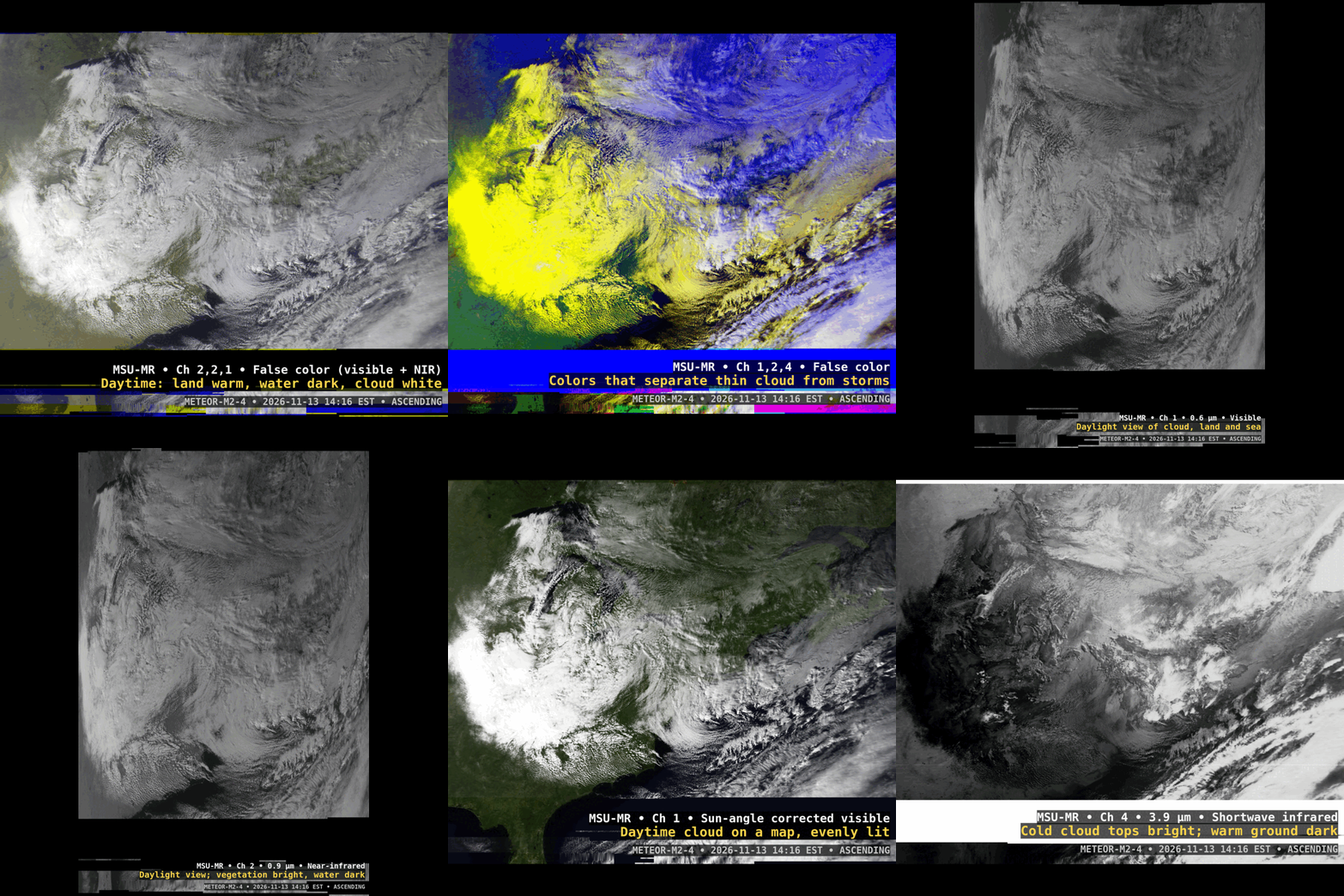
The large image below rotates through every product collected from the most recent METEOR M2-4 pass. Each product is then shown individually under it, with a description of what it shows.
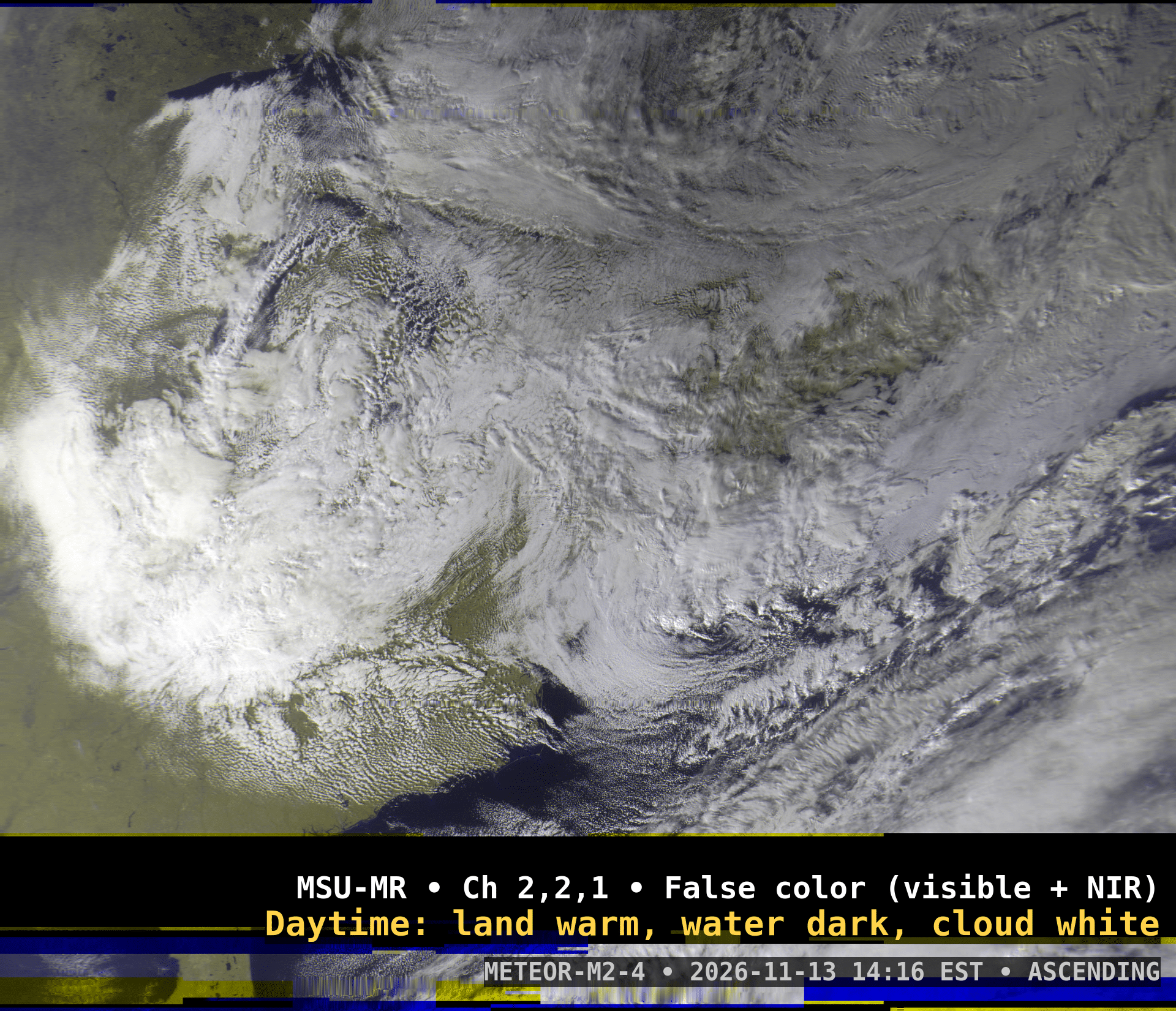
False color 221 — Ch 2,2,1
A daytime color composite: red and green are both near-infrared, blue is visible. Land and vegetation appear in warm tones, water is dark and cloud is white — the product the station displays most often.
False color 221
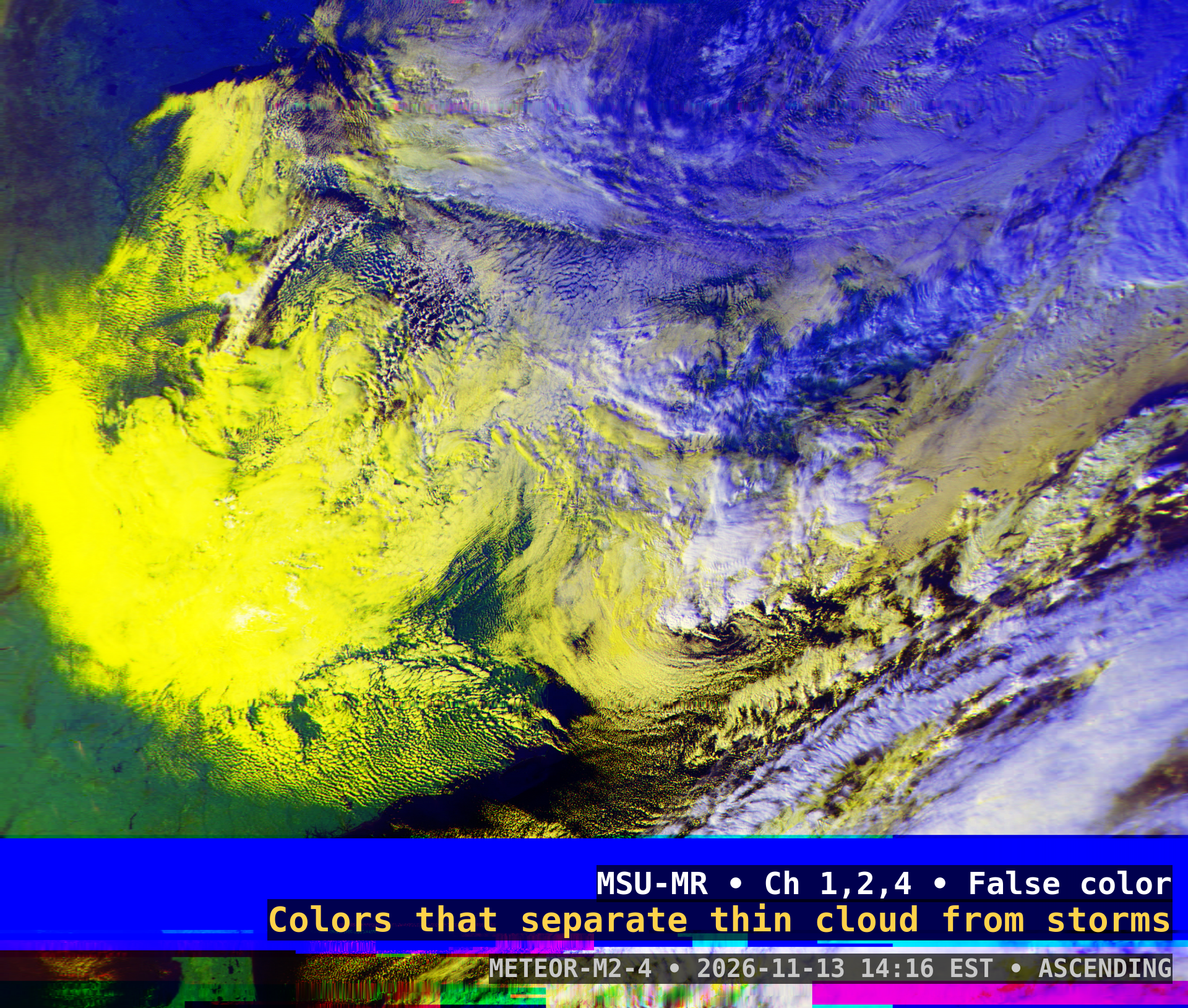
False color 124 — Ch 1,2,4
A daytime composite mixing visible, near-infrared and shortwave infrared. The different responses of water droplets, ice and land help separate thin cloud from thick storm tops.
False color 124
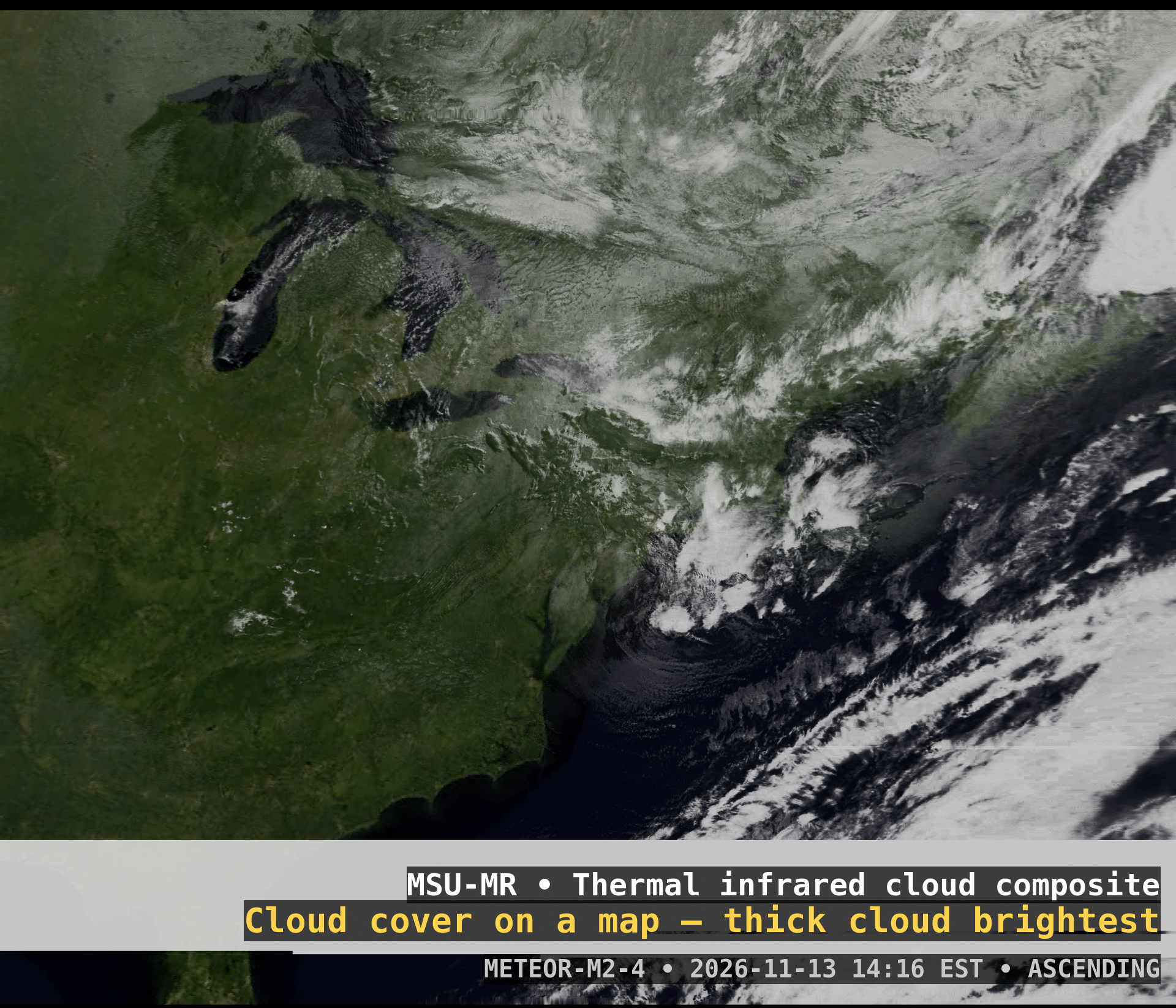
MCIR — thermal infrared cloud composite
Cloud imagery built from thermal infrared and laid over a map. Cloud tops are shown by temperature, so thick high cloud stands out brightest; unlike the visible channels it works day and night.
MCIR
Visible — Ch 1, 0.6 µm
Reflected sunlight in the red part of the spectrum. Shows cloud, land and water much as the eye would see them, but only works in daylight. Useful for judging cloud cover and haze over the region.
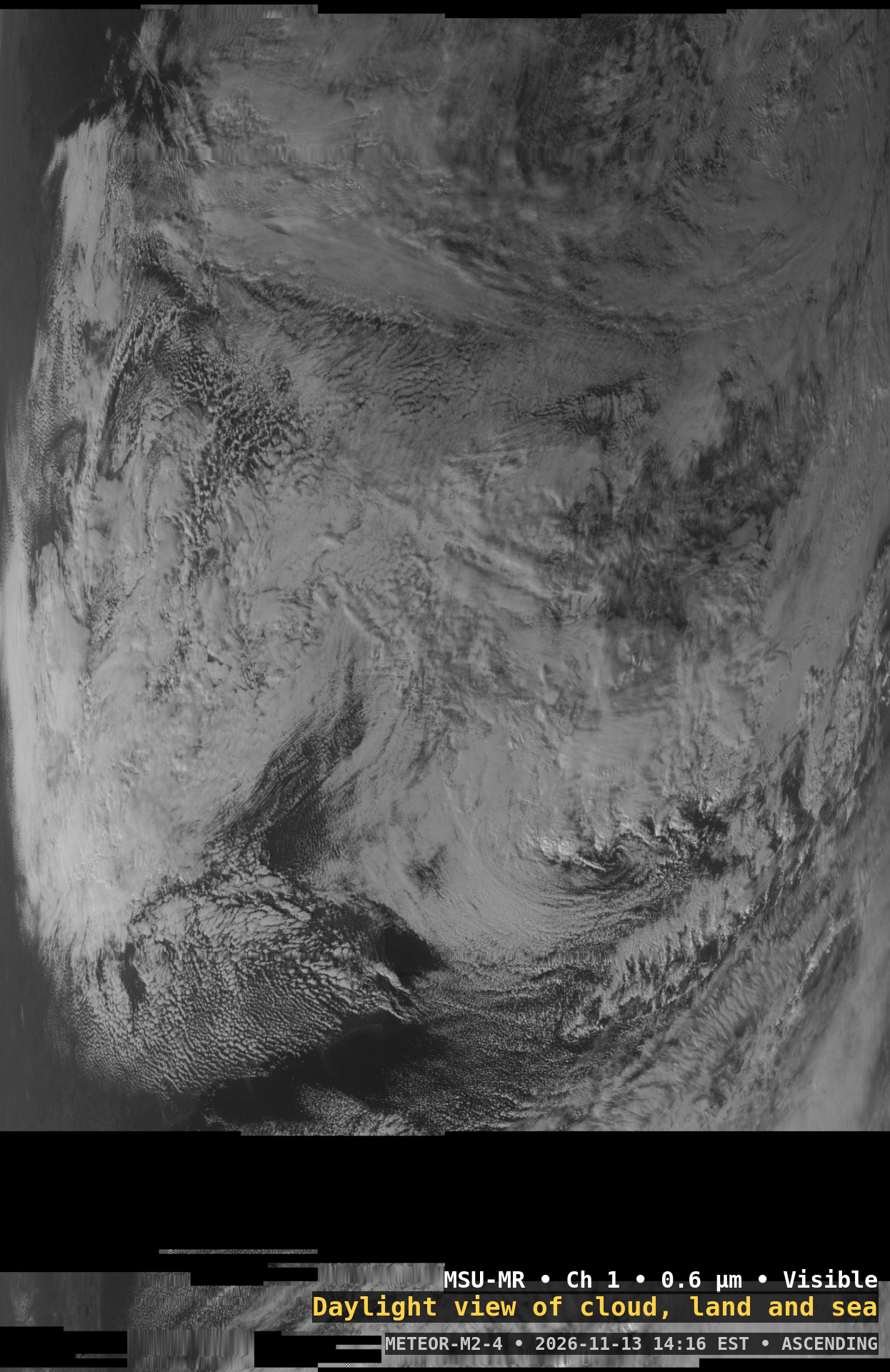
Visible
Near-infrared — Ch 2, 0.9 µm
Reflected sunlight just beyond the visible range. Vegetation reflects strongly here, so land appears bright and water very dark while cloud stays bright — good for tracing coastlines and rivers.
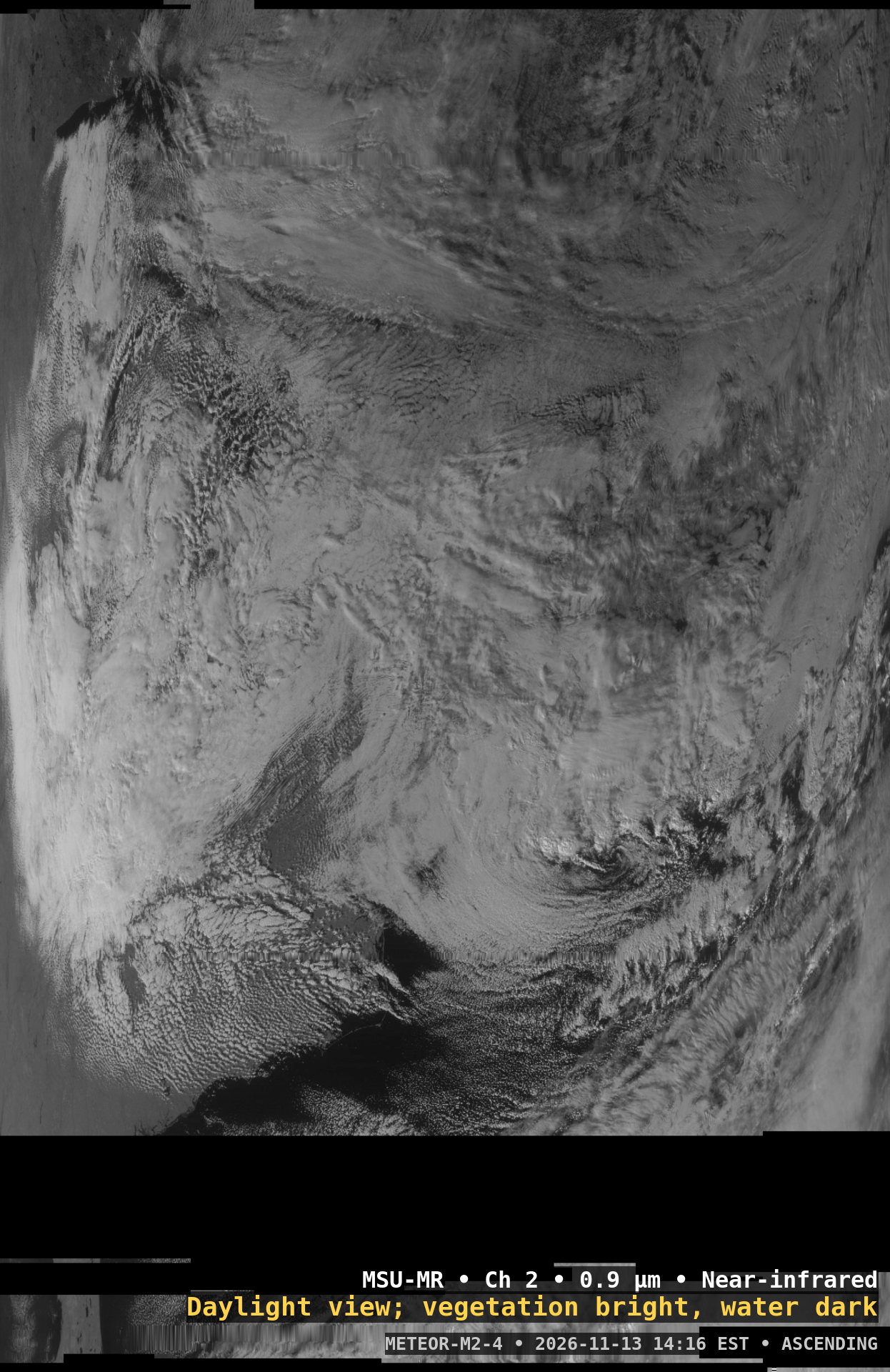
Near-infrared
Shortwave infrared — Ch 4, 3.7 µm
Senses emitted heat from warm surfaces and cloud tops, mixed with reflected sunlight by day. Because it needs less sunlight to show contrast, it can reveal features in twilight that the visible channels miss.
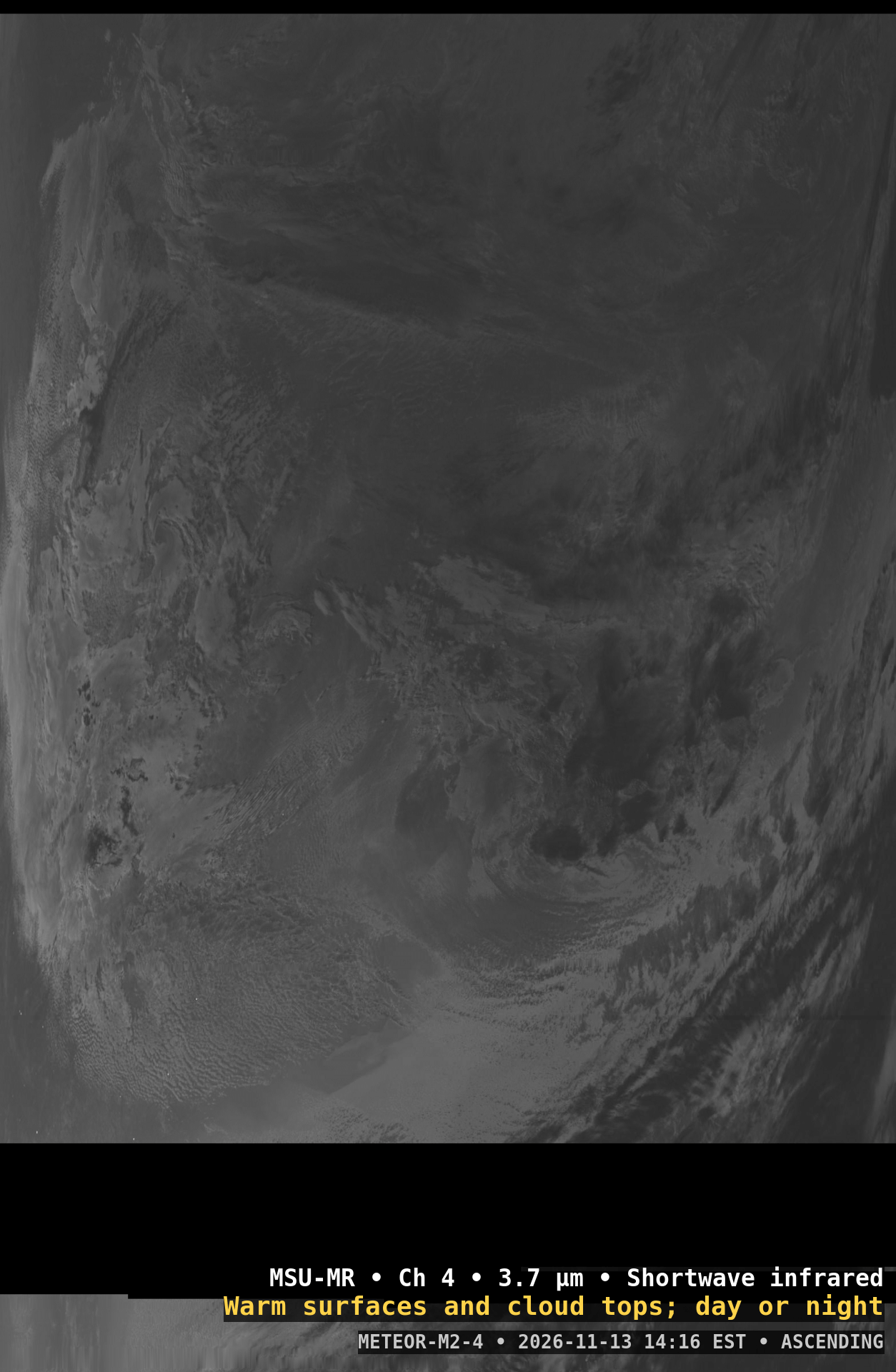
Shortwave infrared
MSA — Ch 1, sun-angle corrected
Visible-light cloud imagery corrected for the changing sun angle across the pass, laid over a map. Without the correction one edge of a pass looks far dimmer than the other; with it the whole swath is evenly lit.
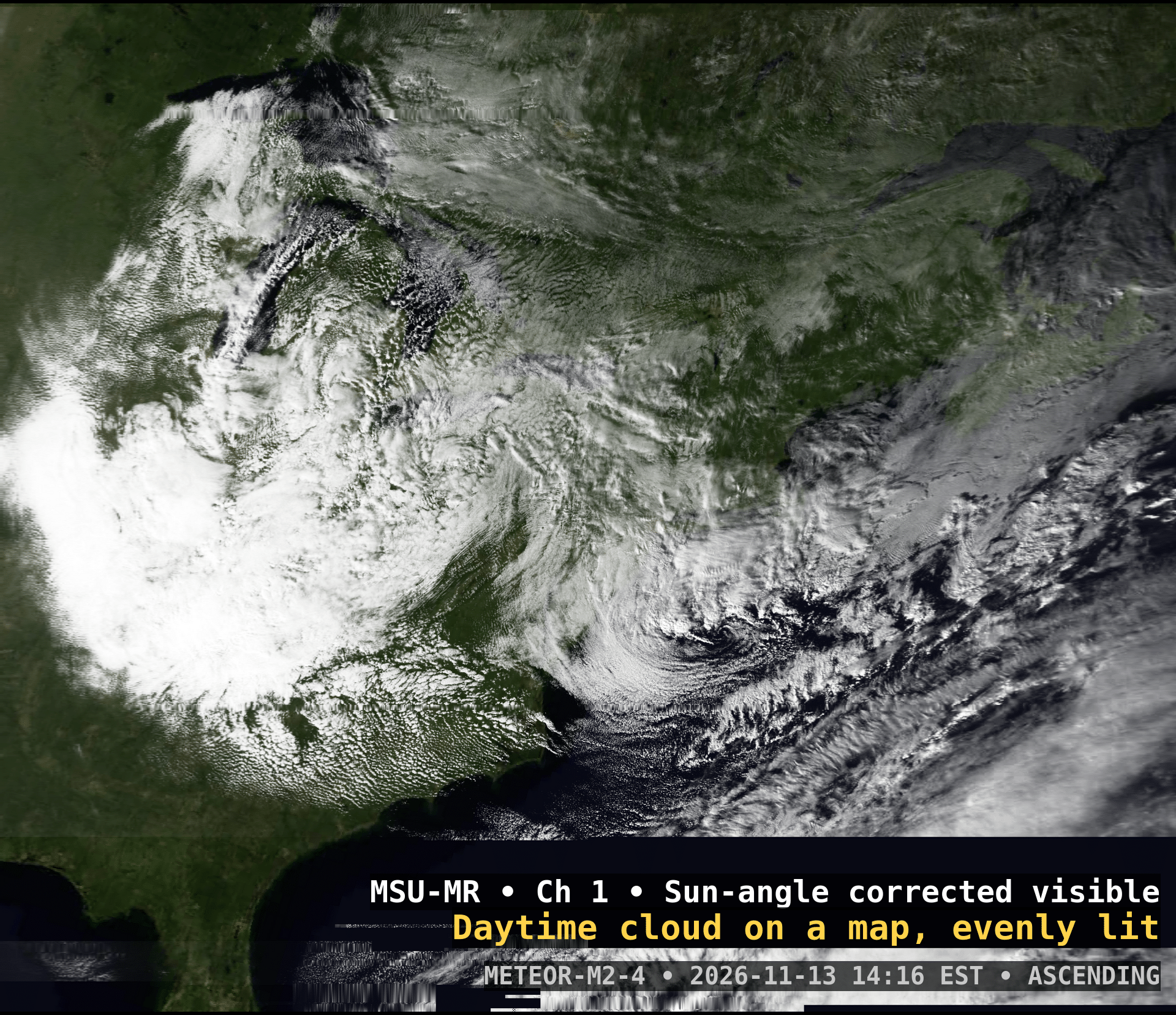
MSA
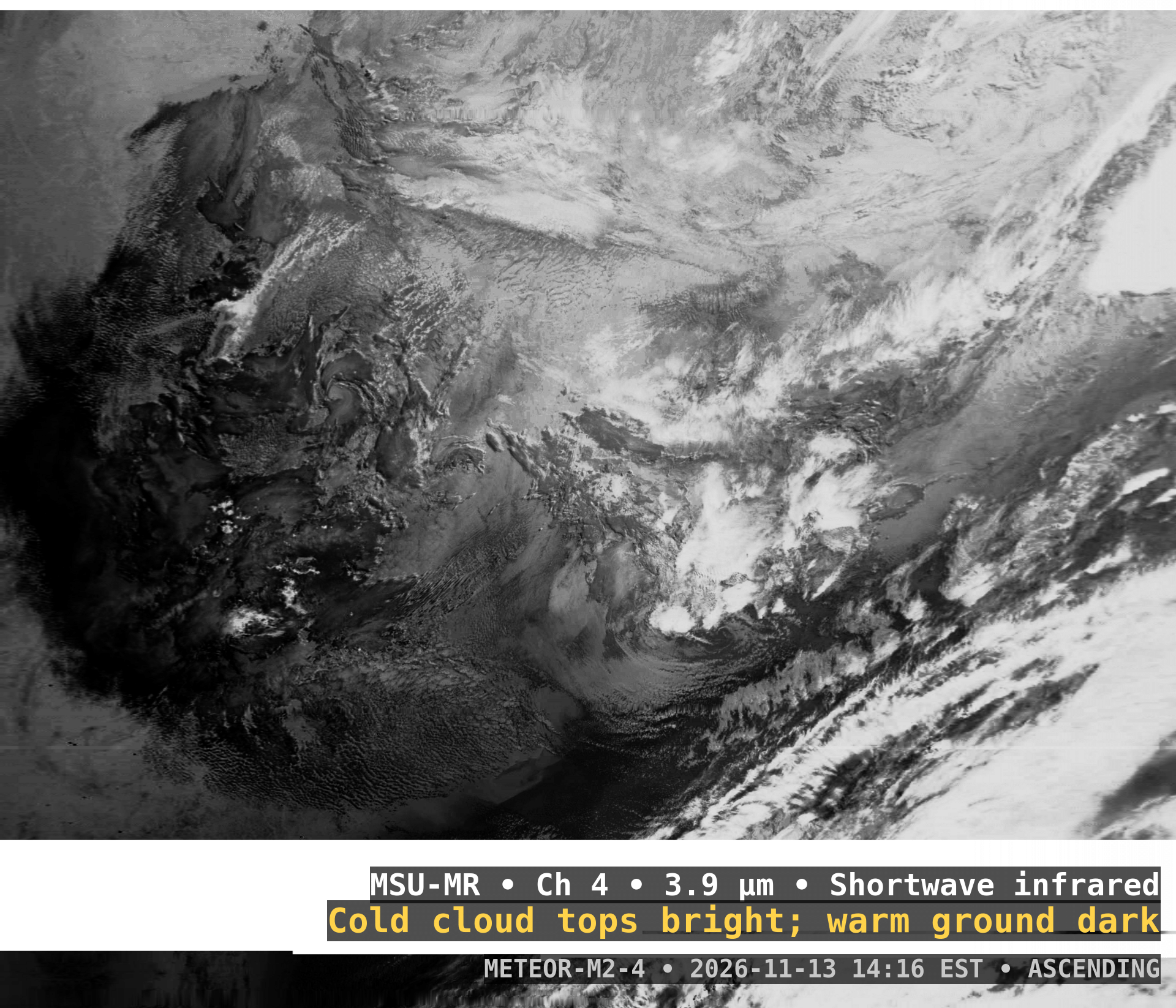
3.9 µm shortwave infrared — Ch 4
A single-band infrared view rendered in greyscale, where cold cloud tops appear bright and warm ground stays dark. Useful for picking out towering storm clouds and fog.
3.9 µm