

Kopernik Observatory & Science Center in Vestal, New York functions as a regional center for Earth Science, Astronomy, and Physical Science studies. The site includes 4 science labs, a nature area, and 3 major observatories with professional telescopes. All programs involve students in the scientific inquiry process and help students ”think and work as scientists”. Particular emphasis is placed on skills in measurement, journaling, observation, prediction, experimentation, use of science tools, and formulating questions.
Kopernik Observatory & Science Center offers two types of school programs:
- GENERAL PROGRAMS are not grade specific and can be adapted to different groups
and grade levels. - GRADE SPECIFIC “THEMATIC” PROGRAMS are aligned to grade level New York State
Science Learning Standards are designed to reinforce and extend science concepts
specific to each grade level curriculum.
Kopernik staff can work with your school or district to develop an experience tailored to your curriculum, schedule, and budget.
When ordering school programs or for questions about school programs, please click the button below to contact our Director of Education, Dr. Laura Lamash. Laura will discuss scheduling and program selections with you. Once this information is confirmed, the purchasing process happens as follows:
For districts within the Broome-Tioga BOCES region go to the Broome-Tioga Extended Classroom website. At that website is the “EC Order Form” to be used for requesting school programs. Districts within other New York BOCES regions may request Kopernik programs through their regional BOCES enrichment COSERS. For non-public schools and schools in Pennsylvania, please work directly with Kopernik to request and purchase programs.
Kopernik school programs can be purchased by districts through regional BOCES in New York State:
- Broome-Tioga (BT) BOCES Extended Classroom
- Tompkins-Seneca-Tioga (TST) BOCES
- Delaware-Chenango-Madison-Otsego (DCMO) BOCES
- Greater Southern Tier (GST) BOCES Exploratory Education
GENERAL PROGRAMS
These are stand-alone programs that can be tailored to different grade and age levels. These programs can be offered at your school or at the Kopernik campus in Vestal, New York. Programs provided at a school location will incur a travel cost when the travel distance is 25 miles or greater from Kopernik Observatory.
KOPERNIK DIGITAL PLANETARIUM (PreK-12)
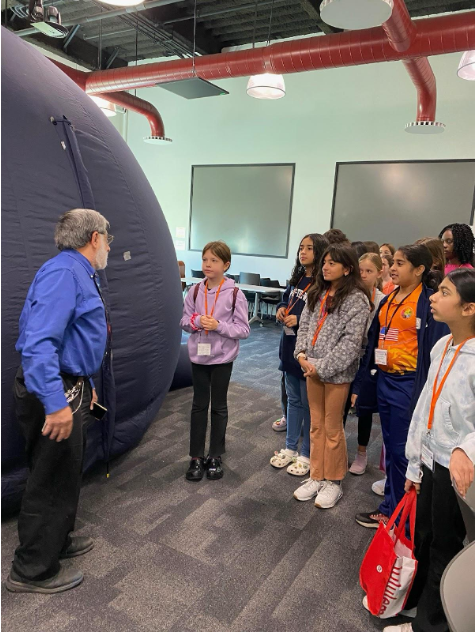
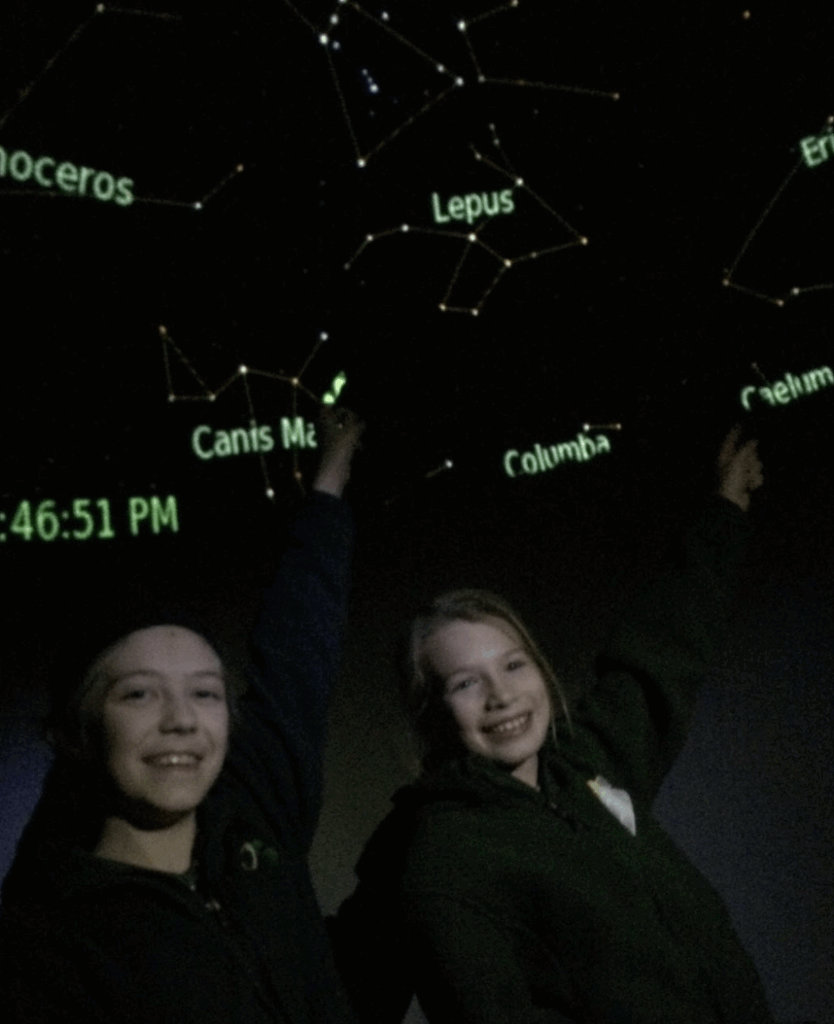
The digital planetarium is a portable planetarium dome and projector that can be transported to schools. Planetarium shows are presented by trained Kopernik educators who tailor content to age groups and can align programs to specific topics or themes, if requested. For ages pre-k through grade 1, the program length is 15 minutes. For all other ages the program length is 25 minutes. When multiple sessions are scheduled, a transition time of 5 minutes is required between sessions for entering and exiting the dome. Our domes can accommodate patrons in a wheelchair. The cost for initial set up is $180. Each hour of programming is $140.
Schools/districts outside the BT-BOCES region (DCMO, OCM, TST Boces) can purchase the planetarium services through a COSER with their regional BOCES. The selection of the dome size can be determined based on the location of the digital dome and the group sizes of students. Our largest dome spans 20 feet across, 11 feet high, and can accommodate up to 25 students, teachers, and aides. The smallest dome is 13 feet across and 9 feet high and can accommodate 15 students and two adults.
Districts and schools within the BT-BOCES region cannot purchase the planetarium services through a COSER. The district or school would need to purchase the services directly from Kopernik. Often schools enlist their parent organizations to underwrite the digital planetarium experience.
AIR ROCKETS (Grades 2 and Up)
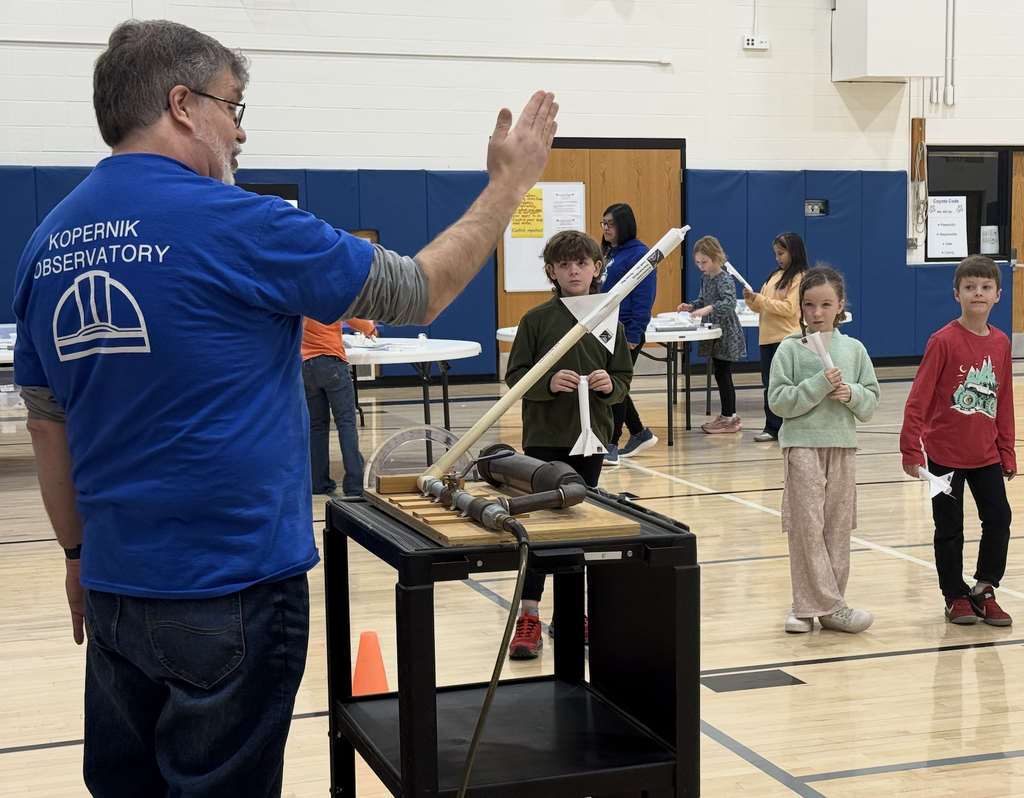
The construction of simple rockets gives students the opportunity to see for themselves how Newton’s laws of motion describe the world around them. Students will create an air rocket out of paper. The rockets are launched using compressed air. Typically, these launches occur outdoors with rockets launching as high as 30 to 40 feet into the air and traveling over 100 feet. Students will see the way wind resistance, gravity, and thrust interact to create motion. Students of all ages find this activity exciting and inspiring. The activity can include students evaluating their launched rocket and redesigning it for a second launch. In the event of inclement weather, rockets can be launched down a long hallway, gymnasium, or auditorium. The program requires 40 minutes to an hour to complete based on the age group and program design. Cost: $130 per section of 24 students.
FOSSILS EVERYWHERE! (Grades 2 and Up)
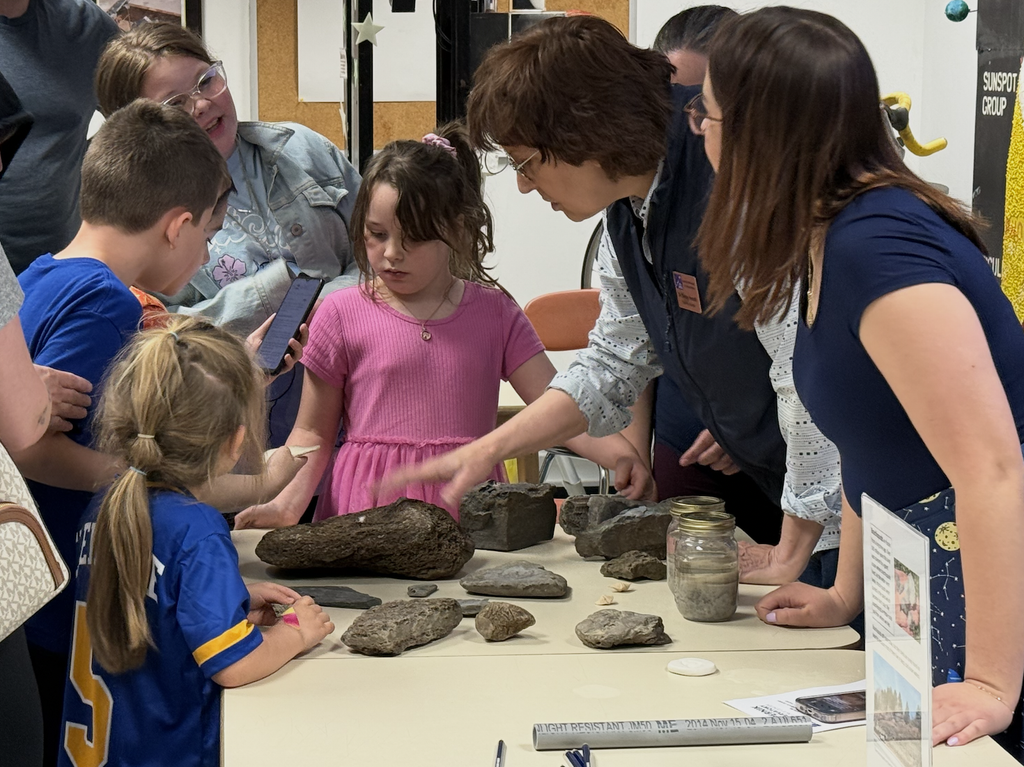
We live in a region rich in fossils! In this program students learn about fossils and how they are created through the processes of erosion and sedimentation. They examine rocks from our region to discover fossils that can be found in our very own creeks, streams, and backyards! Students will create their own fossils using local fossil samples that they can keep and use for their own rock hound adventures. Cost: $130 per class section for up to 24 students.
THE SHAPE OF THE MOON (Grades 2-8)
Why does the surface of the moon look the way it does? The moon is the first celestial object that students come to see and recognize. The recent 2026 Artemis II mission captured new and exciting images of the moon. In this program, students’ imagination for space exploration will be ignited as they learn to identify features of the Moon’s cratered surface. They will create impact craters, and then analyze their results to better understand what they see when they look at the moon with their unaided eye, or with binoculars. Students will be able to identify the largest impact craters, including Copernicus, Kepler, Aristarchus and Tycho. Cost: $140 per class section for up to 24 students.
TITANS OF SPACE: VIRTUAL TOUR OF THE SOLAR SYSTEM (Grades 5-12)
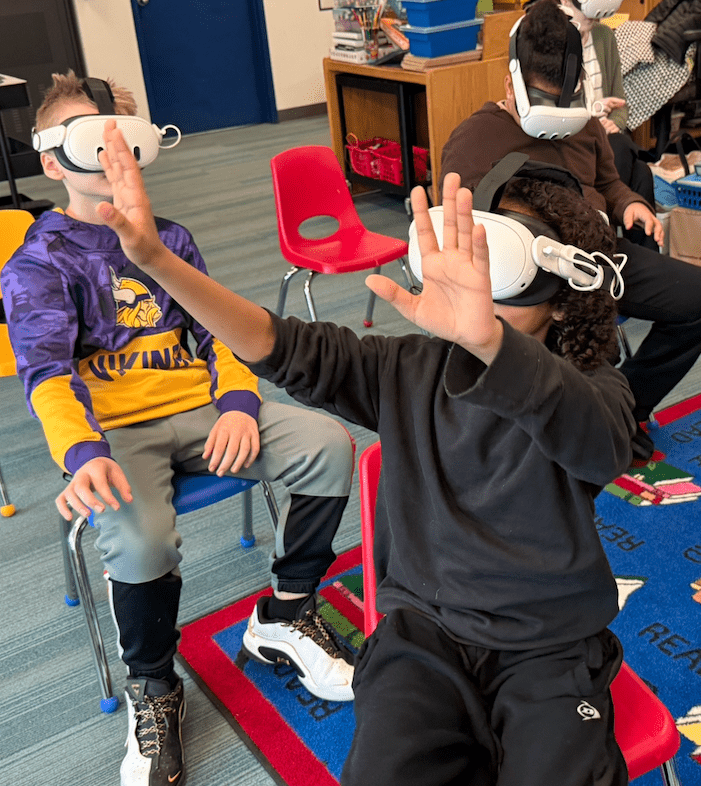
One of the most difficult concepts in astronomy for students to grasp is the scale of distance and size of astronomical objects. Using virtual reality headsets students participate in an immersive tour of the solar system using the program, Titans of Space. Students pilot their own space crafts to travel the solar system, traveling up close to planets, circling around them, and then shearing away to the next. Virtually, students can have an immersive experience of planet sizes in relation to each other and the Sun. They can do “fly-bys” to explore a planet’s surface features and in some cases, its moons or rings. This program can be paired with other activities that emphasize astronomical scale. This experience can accommodate up to 24 students and requires 50 minutes to complete. The cost for one session is $160. Fees for additional activities will be determined based on school requests.
VEX ROBOTICS – Extended Program (Grades 5-12)
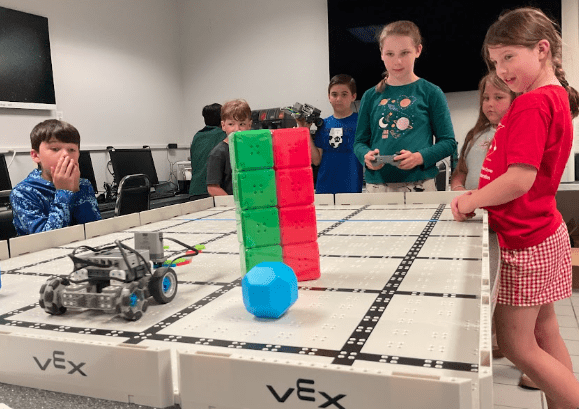
VEX robotics is a hands-on, team based robotics program. In this extended activity, students modify and program a base robot structure to perform a series of challenges remotely with a hand held control and autonomously using Scratch programming. This activity culminates in student teams challenging each other in robot competitions. This activity can accommodate teams of 2 or 3 students up to 25 students. The program can be adapted to fit a time range of between 80 minutes and 2 hours. More extended day programs can also be designed for school groups to engage in extended building and engineering challenges. Pricing is $180 per hour.
LEGO® SPIKE™ ROBOTICS (Grades 1-6)
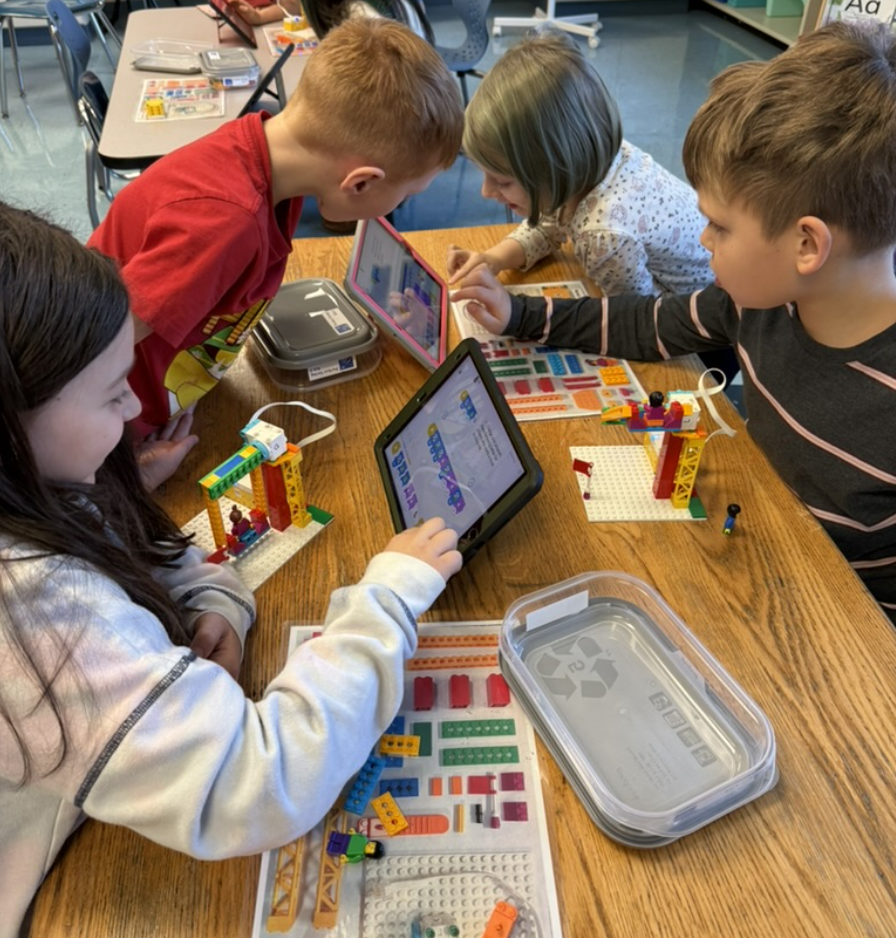
LEGO® Education SPIKE™ activities are designed to help students develop the abstract and critical thinking skills they need to solve complex problems. Each experience broadens students’ understanding of physics as it applies to real-life settings and design. Students are encouraged to create and then recreate their structures to solve different design challenges. All Lego® Spike™ Robotics programs accommodate up to 24 students. Cost is $130 per section.
Trained Kopernik educators provide different levels of SPIKE robotics activities, developmentally suited to age and grade level interests and skills. Each activity explores specific dimensions of engineering design and programming:
- The Perfect Swing (Grades 1-2): This experience introduces students to the concept of a robot as a machine that can complete tasks automatically. Students create a motorized swing and program it to move in a variety of ways. Students are provided an engineering design challenge to extend their thinking and build upon the initial design.
- Mini Golf (Grades 3-4): This experience introduces students to three basic laws of motion. Students create a robotic mini golf course to investigate motion, stability, forces, and interactions. After the initial set up and construction, students are presented with an engineering challenge to extend their thinking and promote problem solving and creativity.
- Ferris Wheel (Grade 4 and 5): This experience extends students’ understanding of simple machines to real world applications. The Ferris Wheel is an example of a wheel and axle. Students build a Ferris Wheel and develop a series of programs to solve different design challenges.
- Taxi Taxi (Grade 4 and 5): This experience introduces an open-ended programming challenge. Students build a motorized car and then program it to move through an obstacle course. (NEW)
- Big Bus (Grade 5 and 6): This experience introduces students to sensor-based programming. Students build a vehicle that includes a light sensor. Students program the vehicle to perform different movements based on colored objects set in its path. (NEW)
STARS IN THE SKY (Grades 3 and up)
Kopernik Observatory & Science Center staff will introduce the students to the celestial night sky here in the Northern Hemisphere. Students will construct a Sky-wheel, also known as a planisphere, that can be used to study the movement of the sky and its constellations. After creating the star wheel, the students will learn how to use the star wheel and make a connection to a night sky simulator called Stellarium that students can use to identify objects in the sky. Cost: $130 per section of 24 students.
MARS LUNAR HABITAT (Grades 3 and 4)
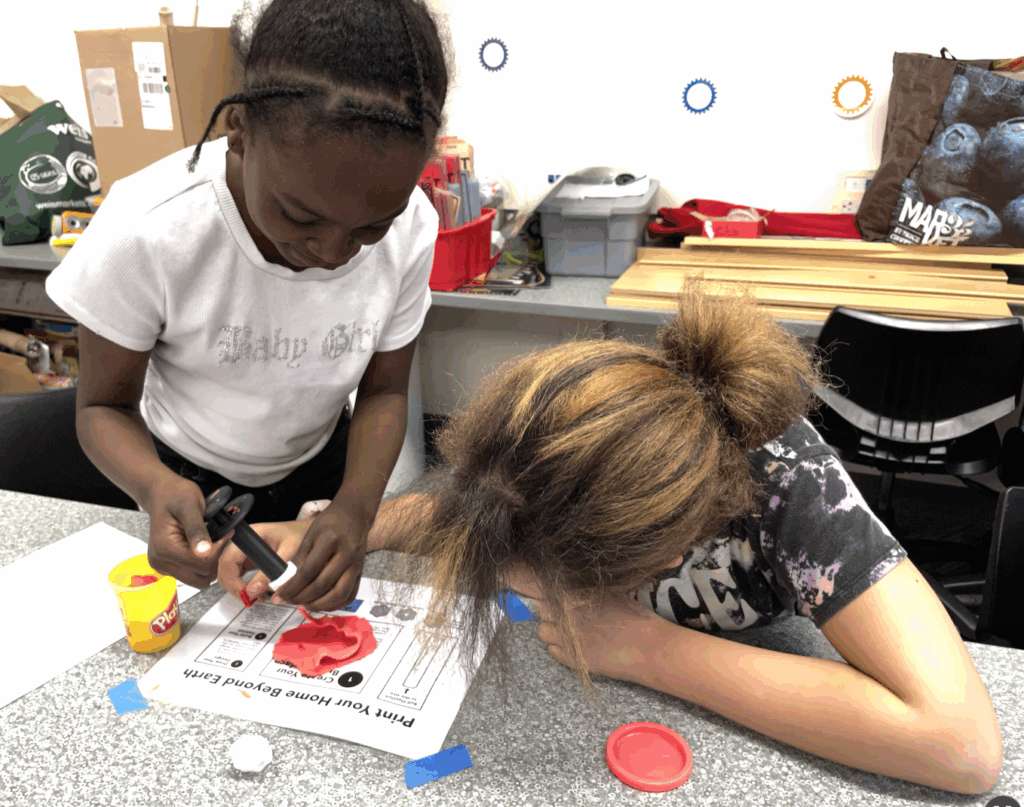
Planning for human habitats in space requires a different way of thinking about construction. This program provides students with an exploration in how advanced additive manufacturing technology (3D-printing) can create habitat solutions that can allow humans to live on Earth, Moon, Mars, and beyond. The students will use the engineering design process to simulate a 3D printer to extrude “regolith” (a polymer soil mixture) to design and build a small-scale human habitat for the Moon or Mars with a design challenge of a time limit and engineering constraints. $130 per section of 24 students.
DISTRICT EVENING EVENT
Kopernik can host an evening event at our Vestal campus or your school for students and families. This can include family activities such as the digital planetarium and science related make-and-take workshops. Kopernik can work with districts on offering an evening of night sky viewing in our telescope domes. Weeknight events can be purchased through a BOCES COSER. Pricing for this would be determined specific to the selection of activities for the event.
DESIGN YOUR OWN
Kopernik staff can work with your school or district to develop a program tailored to your curriculum, schedule, and budget. Cost for each program is $160 per section of 24 students.
GRADE SPECIFIC “THEMATIC” PROGRAMS (Grades 1–8)
The New York State Science Learning Standards advance a three dimensional model of learning:
- Disciplinary Core Ideas: At each grade level, we have developed a series of experiential lessons based on a disciplinary core idea.
- Crosscutting Concepts: Each lesson will attend to concepts that unify the standards across grade levels.
- Practices: Learning at Kopernik emphasizes the practices and mindsets that scientists employ to investigate and build models and theories about the world.
Programs at each grade level are designed as “THEMATICS” based on disciplinary core ideas. The activities in each program work together to provide students with exciting phenomena that engage their sense of wonder and challenge them to elaborate on their science understanding. Grades 3-8 activities are typically scheduled for 40-45 minutes unless otherwise noted. Grades 1 and 2 activities are typically scheduled for 35-40 minutes. All schedules are developed in collaboration with the grade level teachers/teams to accommodate group sizes and transportation schedules.
Programs provided at a school location will incur a travel cost when the travel distance is 25 miles or greater from Kopernik Observatory.
GRADE 1 PROGRAM: Waves and Space Systems – What is an Observatory?
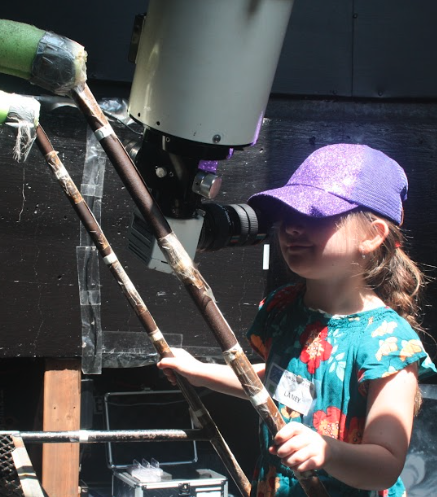
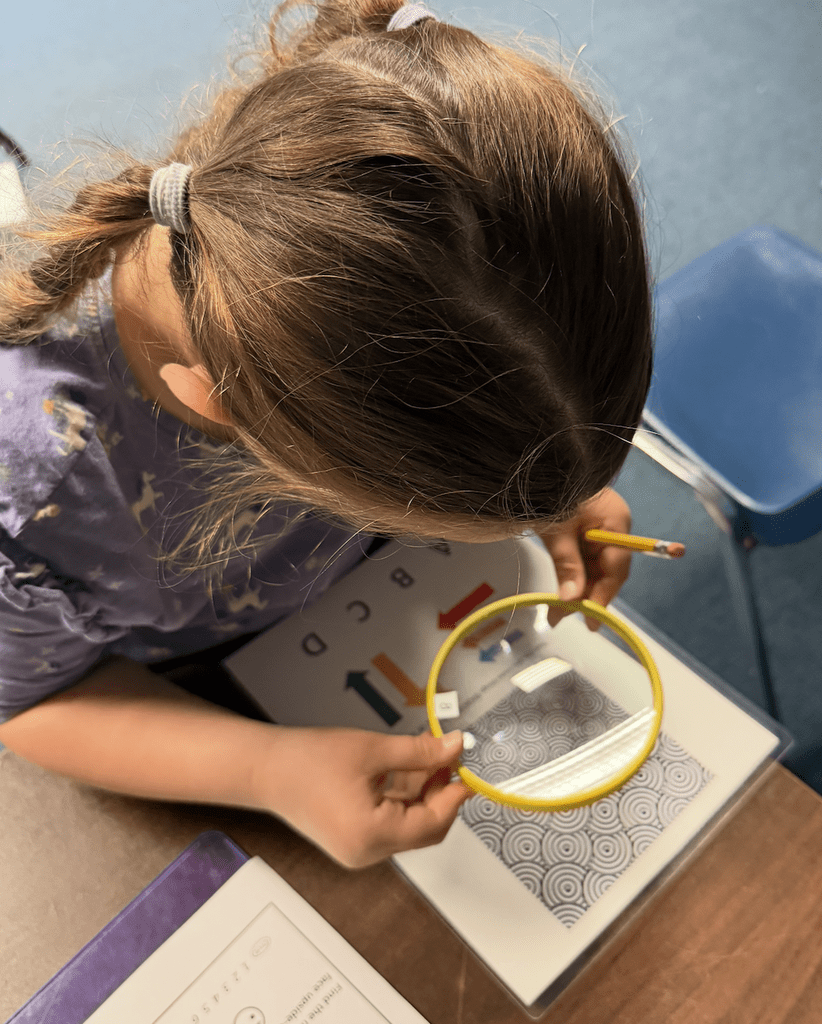
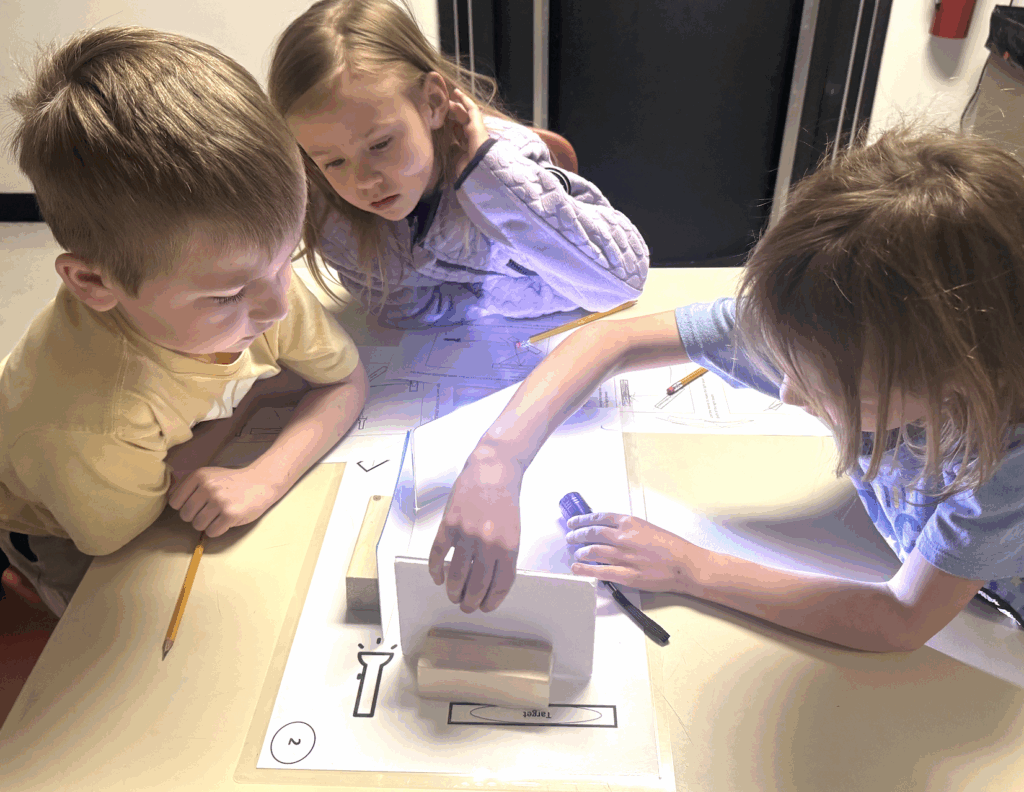
What is an Observatory? consists of two to four programs. The program emphasizes place-based learning to provide first grades as an extension to the first-grade science standards in two domains, Waves (PS4) and Space Systems (ESS1). This thematic experience introduces and reinforces students’ understanding of the properties of light and patterns in the solar system by showing them what an observatory is, how it works, and what astronomers do. By the end of their visit to Kopernik, students will understand how astronomers use “giant” telescopes to learn about the solar system and universe.
Students engage in a variety of hands-on activities to explore the properties of light and how a telescope uses these properties to help us see far away objects.
- “Blocking” light beams: Students explore how shadows are created by the relationship between an object and a beam of light.
- “Bouncing” light beams: Students explore the ways in which light bounces or is reflected off of surfaces. They explore the ways in which mirrors can change the path of a light beam. (Reflection)
- “Bending” light beams: Students explore the ways in which lenses bend light to change the shape of objects. (Refraction)
1A. Activity: What is an observatory?
Students will tour the night sky using Kopernik’s room-sized digital planetarium to experience what astronomers can see through telescopes. They will understand that constellations are patterns that astronomers use to understand the stars in the sky. Astronomers see these objects because they give off light (stars) or reflect light (planets). Students will tour the observatory domes and see the large telescopes that are used to look at the sky. Cost (Kopernik Campus): $130 per class section for up to 24 students.
1B. Activity: What is a telescope? A Telescope “Petting Zoo”
A telescope uses mirrors and lenses to make far away objects visible to us. In an activity called the “telescope petting zoo” students explore the different parts of a telescope and how these parts work together in a large, refracting telescope they can use. This activity coordinates with the programs, “How does light move?” and “What is a shadow?” to understand how “bending” and “bouncing” light beams are used by telescopes to look at celestial objects. Cost: $130 per class section for up to 24 students.
1C. Activity: How does light move?
Light travels in a straight line. But light can be reflected and bent so it can go in different directions. Using a laser, we make visible to students the way a light beam travels and refracts or “bounces” off different surfaces. Students will explore the property of refraction for themselves as they work in teams to move a light beam through an obstacle course to a target using an array of mirrors. Cost: $130 per class section for up to 24 students.
1D. Activity: What is a shadow?
A shadow is formed when light is blocked by an opaque object. Students will explore designing and drawing shadows using three dimensional objects and a fixed light source. Students will experience and document the transformation of a shape based on its positioning in a beam of light. Cost: $130 per class section for up to 24 students.
| Grade 1 Program: What is an observatory? NYSSLS Alignment | |
| Kopernik Activities What is an observatory? | 1A. What is an observatory? 1B. What is a telescope? 1C. How does light move? 1D. What is a shadow? |
| Disciplinary Core Ideas | Electromagnetic Radiation:
Information Technologies and Instrumentation:
The Universe and its Stars:
Earth and the Solar System:
|
| Crosscutting Concepts | Cause and Effect:
|
| Science and Engineering Practices |
|
GRADE 2 PROGRAM: Earth Systems – Why do we have mountains and rivers?
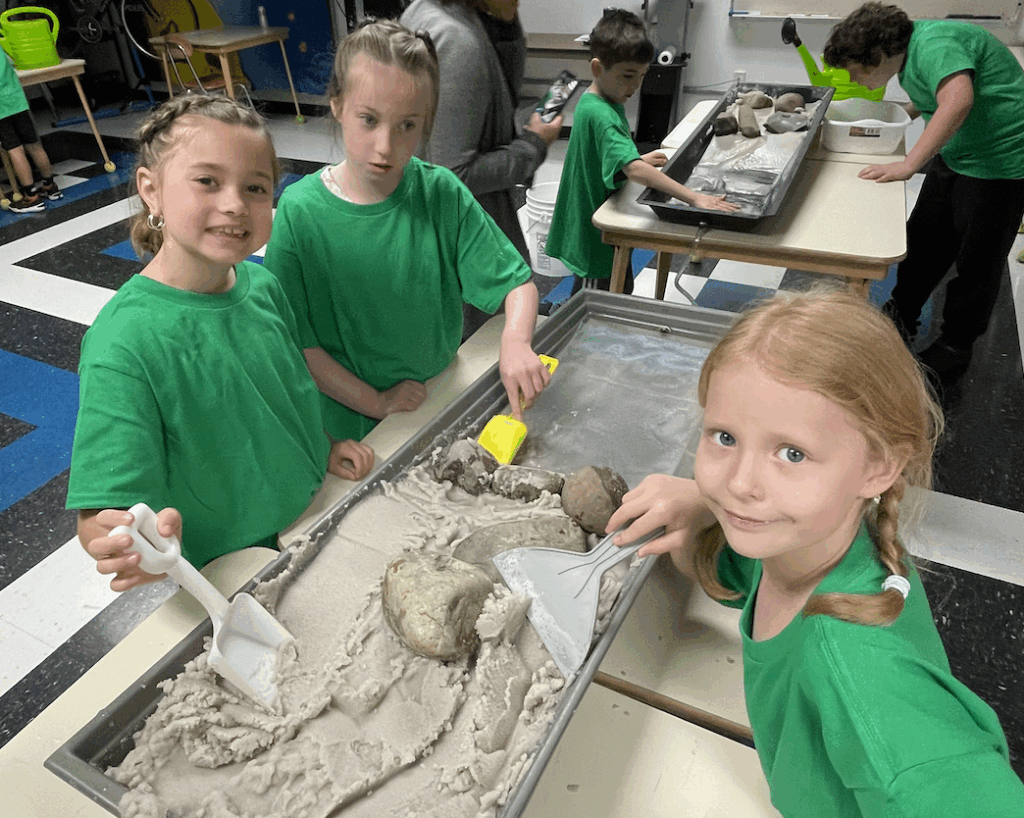
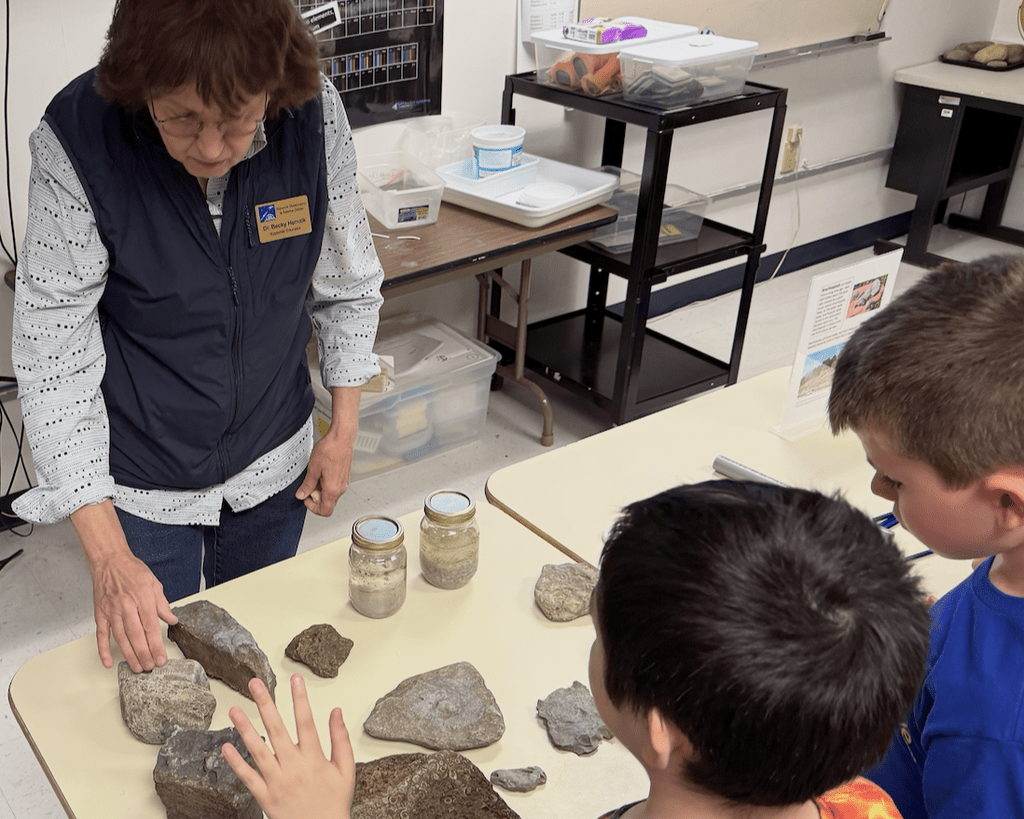
“Why do we have mountains and rivers?” is a question second graders can ask and answer in exploring the core idea of Processes that Shape the Earth. Each program presents hands-on explorations in understanding the different processes that form and reform the earth’s surface either slowly or quickly. The programs provide students with an age-appropriate experiential understanding of the geologic processes aligned to NGSS Earth Systems Science grade 2 standards.
In planning Earth System: Processes that Shape the Earth for your school or class, you can select from four programs. Earth System: Processes that Shape the Earth is best as an on-site experience at the Kopernik campus to allow for access to the observatory’s stream tables and portable planetarium.
In addition to Earth System: Processes that Shape the Earth, schools may request the Lego® Spike™ Robotics program, The Perfect Swing in which students create a robotic swing arm to investigate motion, energy, stability, forces, and interactions.
Kopernik staff can work with your school or district to develop a program tailored to your curriculum, schedule, and budget. Each program is designed for class sections for up to 24 students.
2A. Activity: Stream Tables
How does water form and transform the earth’s surface? This activity helps students understand the topography of our region – the mountains and valleys that surround the Susquehanna, Chenango, and Tioughnioga rivers. Using stream tables, students experiment with the ways in which water interacts with land features to create rivers, valleys and estuaries. They will explore the influence of flowing water on landforms, experiment with erosion resistant designs, and identify patterns of erosion. Cost: $140 per class section for up to 24 students.
2B. Activity: Glaciers
How do glaciers change the shape of the land? In this activity, students use information from several sources to provide evidence that Earth events can occur quickly or slowly. The big idea for this lesson is, glaciers have drastically changed and shaped our land for over thousands of years. This aligns to the NGSS cross-cutting concept, “Stability and Change”- things may change slowly or rapidly. It also focuses on the science and engineering practices of understanding and developing models, and obtaining, evaluating, communicating information. Students will be able to observe, diagram, and record how glaciers can change the land using a model. Cost: $130 per class section for up to 24 students.
2C. Activity: Fossils Around Us!
What is a fossil? Students learn about fossils and how they are created through the processes of erosion and sedimentation. They examine rocks from our region to discover fossils that can be found in our very own creeks, streams, and backyards! Students will create their own fossils using local fossil samples that they can take with them and us for their own rock hound adventures. Cost: $130 per class section for up to 24 students.
2D. Activity: The Shape of the Land – Creating Diagrams and Models of Landforms
What can models tell us about landforms? In this activity, students develop a model to represent the shapes and kinds of land and bodies of water in an area. Students will create a diagram of an imaginary island to incorporate landforms and bodies of water. The students will use symbols and a key to complete their diagram. Using this diagram, students will create a 3-D model of their island on a paper plate using clay or playdough and labeling the landforms and water with flags. Cost: $130 per class section for up to 24 students.
2E. Activity: The Shape of Planets — Planetarium Experience
Do other planets have mountains and valleys? What does the surface of other planets look like? The planetarium show will focus on learning about the physical features of the planets in our solar system, that would extend students’ understanding of landforms, while also reinforcing Gr.1 standards in space systems. After the planetarium show, students tour the observatory’s telescope domes. Cost (Kopernik Campus): $140 per class section for up to 24 students.
2F. Activity (Supplemental): Lego® Spike™ Robotics
Perfect Swing: Students create a robotic swing arm to investigate motion, energy, stability, forces, and interactions. Cost: $130 per class section for up to 24 students.
| GRADE 2 PROGRAM: Earth Systems – Why do we have mountains and rivers? NYSSLS Alignment | |
| Kopernik Programs Why do we have mountains and rivers? | 2A. Stream Tables 2B. Glaciers 2C. Fossils Around Us! 2D. The Shape of the Land – Creating Diagrams and Models of Landforms 2E. The Shape of Planets – Planetarium Experience 2F. (Supplemental) Lego® Spike™ Robotics |
| Disciplinary Core Ideas | The History of Planet Earth:
Earth Materials and Systems:
Plate Tectonics and Large-Scale System Interactions:
The Roles of Water in Earth’s Surface Processes:
|
| Crosscutting Concepts | Patterns:
Stability and Change:
|
| Science and Engineering Practices | Developing and Using Models:
Constructing Explanations and Designing Solutions:
|
GRADE 3 PROGRAM: Forces and Motion – What causes objects to move?
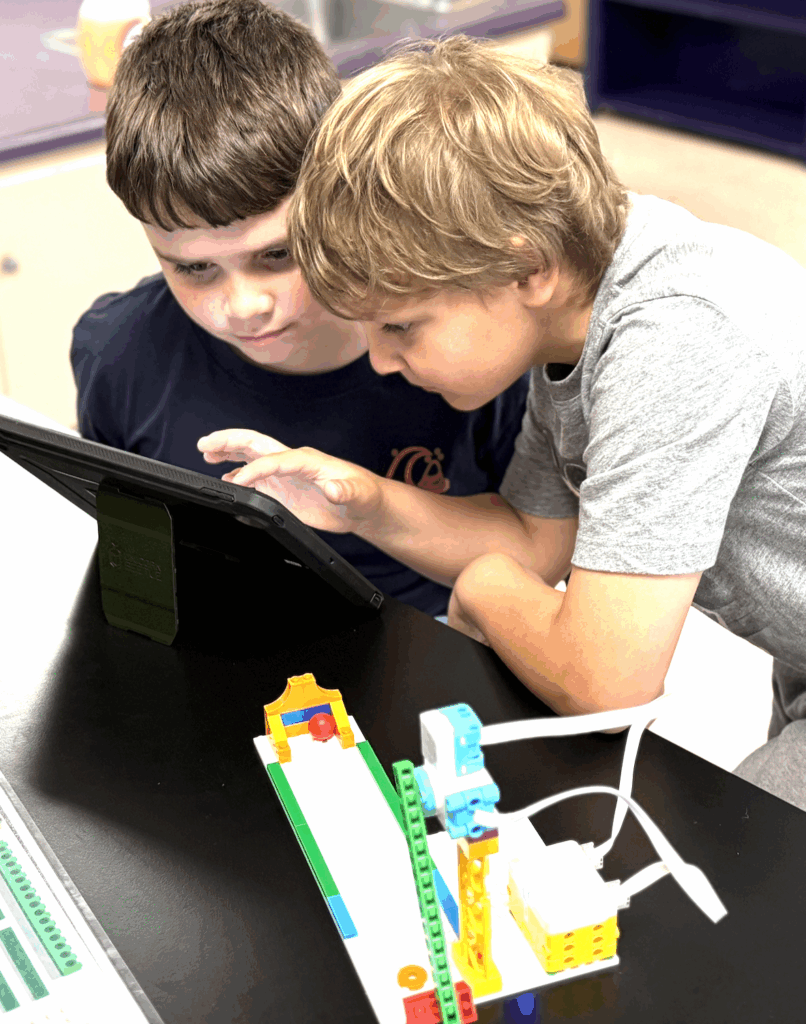
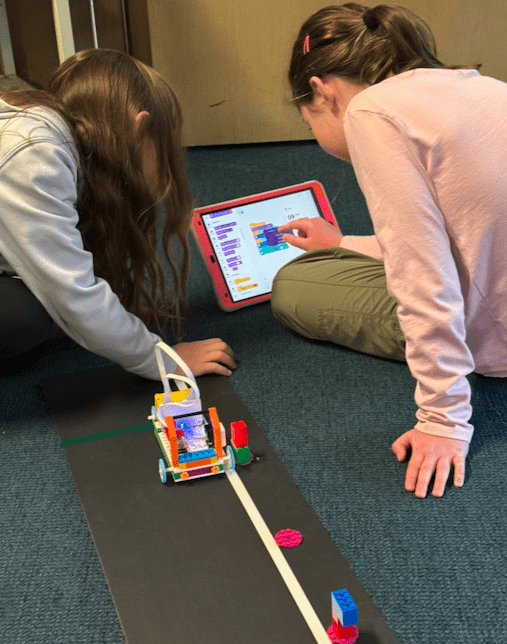
Forces and Motion consists of programs offering active hands-on experiences in understanding the ways in which the forces of gravity and magnetism interact with objects to create motion. The programs in this unit provide students with an age-appropriate experiential understanding that is aligned to the NGSS standards on Motion and Stability: Forces and Interactions.
In planning Forces and Motion for your school or class, you can select from three programs. Forces and Motion is best as an on-site experience at the Kopernik campus but can be adapted for presentation at a school location. Kopernik staff can work with your school or district to develop a program tailored to your curriculum, schedule, and budget. Each program is designed for class sections for up to 24 students.
3A. Activity: Playground Physics (Extended)
What can playgrounds teach us about the laws of force and motion? In this activity, students explore the physics of playground equipment they commonly use – the slide, see saw, and swing. Students draw on their rich playground experiences to learn about simple machines (lever, inclined plane), devices (pendulum)and the laws of motion that influence their movement. This is an extended one hour activity in which students move between three learning stations based on the physics of three playground features: the swing (pendulum), the slide (inclined plane) and the see saw (lever). Cost: $160* per class section for up to 24 students (*requires three educators).
3B. Activity: Magnets and Motion
How do magnets create motion? In this activity, students explore magnetism and the forces of polarity through hands-on experiences. They will learn how magnetic forces act to create motion and how this motion is used in engineering design. Students will experience magnetic levitation and its application to engineering design. Cost: $130 per class section for up to 24 students.
3C. Activity: Lego® Spike™ Robotics
What can robotics teach us about forces and motion? In this activity, students participate in hands-on robotic design and programming. Students create a robotic “mini” mini golf course to investigate the three basic laws of physics. After the initial set up and construction, students are presented with an engineering challenge designed to extend their thinking and promote problem solving and creativity. Cost: $130 per class section for up to 24 students.
3D. Activity: Air Rockets – It is Rocket Science!
The construction of simple rockets gives students the opportunity to see for themselves how Newton’s laws of motion describe the world around them. Students will create an air rocket out of paper. The rockets are launched using compressed air. Typically, these launches occur outdoors with rockets launching as high as 30 to 40 feet into the air and traveling over 100 feet. Students will see the way wind resistance, gravity, and thrust interact to create motion. Students of all ages find this activity exciting and inspiring. The activity can include evaluating their launched rocket and redesigning it for a second launch. In the event of inclement weather, rockets can be launched down a long hallway, gymnasium, or auditorium. The program requires 40 minutes to an hour to complete based on the age group and program design. Cost: $130 per section of 24 students.
GRADE 3 PROGRAM: Forces and Motion – What causes objects to move? | |
| Kopernik Programs What causes objects to move? | 3A: Playground Physics 3B: Magnets and Motion 3C: Lego Spike Robotics 3D. Air Rockets – It is Rocket Science! |
| Disciplinary Core Ideas | Forces and Motion:
Types of Interactions:
|
| Crosscutting Concepts | Cause and Effect:
|
| Science and Engineering Practices | Planning and Carrying Out Investigations:
|
GRADE 4 PROGRAM: Waves and Motion – What is a wave?
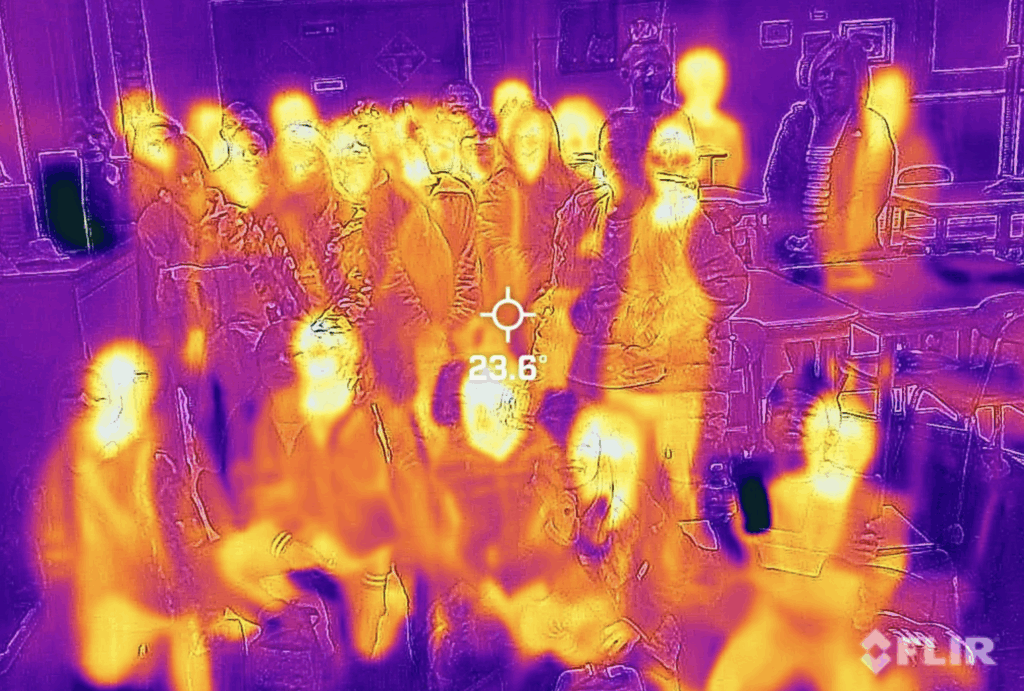
The Kopernik program, Waves and Motion explores the understanding that “waves cause objects to move.” In Waves and Motion students experience how wave energy occurs in the form of light waves, seismic waves, and sound waves. It promotes an understanding of waves as the way in which energy is transferred between objects, or converted from one form of energy into another. Students explore different types of models of waves to describe wave patterns and to demonstrate waves as a force of motion.
In addition to Waves and Motion, schools may request the Lego® Spike™ Robotics program, Taxi Taxi which introduces an open-ended programming challenge. Students build a motorized car and then program it to move through an obstacle course.
In planning Waves and Motion for your school or class, you can select from three programs. Waves and Motion is best as an on-site experience at the Kopernik campus but can be adapted for presentation at a school location. Kopernik staff can work with your school to develop a program tailored to your curriculum, schedule, and budget.
4A. Activity: Rattle and Rock! Earthquake Engineering
How do seismic waves affect a built structure? Students explore how seismic waves impact built structures. Students work in teams to engineer a structure. Using a specially designed seismic table, students test their structure by exposing it to lateral (back and forth) seismic waves. This activity includes an overview of plate tectonics to support an understanding of seismic movements. Cost: $130 per class section of up to 24 students.
4B. Activity: Visible and Invisible Light
Is there light we cannot see? In this activity, students explore the properties of light and an understanding of the electromagnetic spectrum to compare “visible” light (that can be seen by the human eye) and infrared light (visible to some insects and animals and through specialized devices). Students explore the properties of infrared light and its applications in daily life. Cost: $130 per class section for up to 24 students.
4C. Activity: Seeing Sound (NEW)
How do waves create sounds we can hear? In this activity, students explore sound phenomena as a form of mechanical wave energy that can be seen and felt. Students look at the way in which sound is converted from mechanical energy to electrical energy so it can be carried over distances. Cost: $130 per class section for up to 24 students.
4D. Activity (Supplemental): Lego® Spike™ Robotics
Taxi Taxi (Grade 4 and 5): This experience introduces an open-ended programming challenge. Students build a motorized car and then program it to move through an obstacle course. Cost: $130 per class section for up to 24 students.
| GRADE 4 PROGRAM: Waves and Motion – What is a wave? NYSSLS Alignment | |
| Kopernik Programs What is a wave? | 4A. Rattle and Rock! Earthquake Engineering 4B. Visible and Invisible Light 4C. Seeing Sound (NEW) 4D. (Supplemental): Lego® Spike™ Robotics Taxi Taxi |
| Disciplinary Core Ideas | Wave Properties:
Information Technologies and Instrumentation:
|
| Crosscutting Concepts | Patterns:
|
| Science and Engineering Practices | Developing and Using Models:
Constructing Explanations and Designing Solutions:
|
GRADE 4 PROGRAM: Earth Systems – What processes shape the Earth?
The Kopernik program, Earth Systems: What processes shape the earth? focuses on geologic processes. The programs in this unit provide students with an age-appropriate experiential understanding of the aligned to the NGSS standards on Earth Systems:
In planning Earth Systems: Processes that Shape the Earth for your school or class, you can select from five programs. Earth Systems: Processes that Shape the Earth is best as an on-site experience at the Kopernik campus but can be adapted for presentation at a school location.
Kopernik staff can work with your school or district to develop a program tailored to your curriculum, schedule, and budget. Each program is designed for class sections for up to 24 students.
4A. Activity: Rattle and Rock! Earthquake Engineering
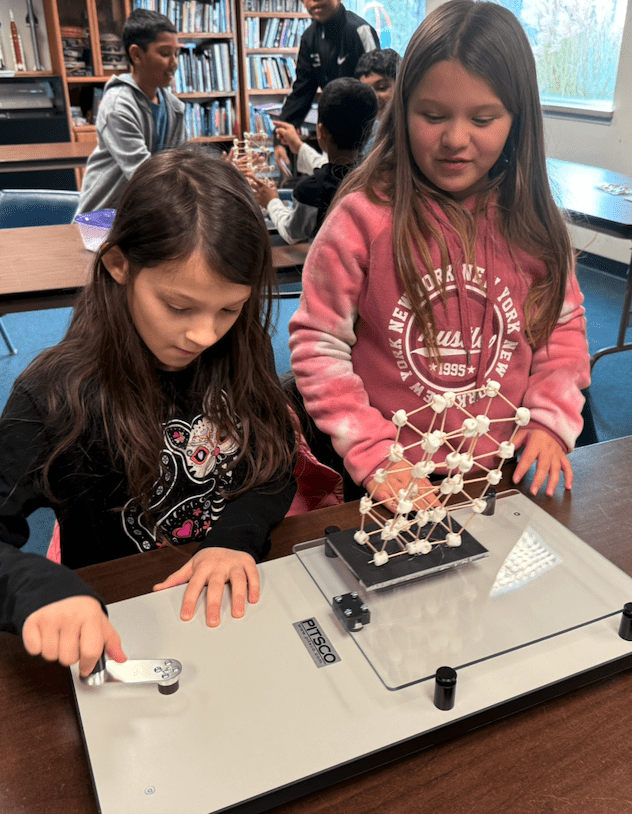
How do seismic waves affect a built structure? In this activity, students explore the ways in which seismic waves impact built structures. Students work in teams to engineer a structure. Using a specially designed seismic table, students test their structure by exposing it to lateral seismic waves. They evaluate how different designs respond to seismic movement and determine what works best. This activity includes an overview of plate tectonics to support an understanding of seismic activity. Cost: $130 per class section for up to 24 students.
4E. Activity: Stream Tables
How does water form and transform the earth’s surface? Using stream tables students experiment with the ways in which water interacts with land features to create rivers, valleys, and estuaries. They will explore the influence of flowing water on landforms, experiment with erosion resistant designs, and identify patterns of erosion. Cost: $130 per class section for up to 24 students.
4F. Activity: Rocks Around Us!
What can the rocks we see tell us about the processes that shape the earth? In this activity, students identify and examine the three types of rock — sedimentary, igneous, and metamorphic – as clues to the earth processes that created them. This sets the stage for a deep dive into learning about sedimentary rocks that define the geology of our region. Students will learn about fossils and how they are created through the processes of erosion and sedimentation. They will examine rocks from our region to discover fossils that can be found in our very own creeks, streams, and backyards! Students will create their own fossils using local fossil samples that they can keep and use for their own rock hound adventures. Cost: $130 per class section for up to 24 students.
4G. Activity: The Shape of Planets — Planetarium Experience
Do other planets have mountains and valleys? What does the surface of other planets look like? The planetarium show will focus on learning about the physical features of the planets in our solar system as a way to extend students’ understanding of landforms. After the planetarium show, students will tour the observatory’s telescope domes. Cost (Kopernik Campus): $140 per class section for up to 24 students.
4H. Activity: The Shape of the Moon
Why does the surface of the moon look the way it does? The moon is the first celestial object that students come to see and recognize. The recent 2026 Artemis II mission captured new and exciting images of the moon. In this program, students’ imagination for space exploration will be ignited as they learn to identify features of the Moon’s cratered surface. They will create impact craters, and then analyze their results to better understand what they see when they look at the moon with their unaided eye, or with binoculars. Students will be able to identify the largest impact craters, including Copernicus, Kepler, Aristarchus and Tycho. Cost: $130 per class section for up to 24 students.
| GRADE 4 PROGRAM: Earth Systems – What processes shape the Earth? NYSSLS Alignment | |
| Kopernik Programs What processes shape the Earth? | 4A. Rattle and Rock! Earthquake Engineering 4E. Stream Tables 4F. Rocks Around Us! 4G. The Shape of Planets — Planetarium Experience 4H. The Shape of the Moon |
| Disciplinary Core Ideas | The History of Planet Earth:
Earth Materials and Systems:
Natural Hazards:
Designing Solutions to Engineering Problems:
|
| Crosscutting Concepts | Patterns:
Cause and Effect:
|
| Science and Engineering Practices | Planning and Carrying Out Investigations:
Constructing Explanations and Designing Solutions:
|
GRADE 5 PROGRAM: Earth Systems – We All Live In A Watershed
Where does the water around us go? We all live in a watershed. All the water we use as well as all the streams, lakes, creeks and rivers around us flow into the Susquehanna or Delaware rivers and these rivers flow into the Atlantic Ocean. This program introduces students to the dynamics of a watershed. Students explore the interaction of water and landforms to understand how the biosphere, hydrosphere, and geosphere are complex systems that affect how we live and where we live, and the shape of the land around us.
5A-1. Activity: Welcome to Our Watershed -Susquehanna River
Where does the water around us go? Susquehanna River is the longest river on the East Coast flowing 444 miles from New York, through Pennsylvania and into Maryland where it flows into the Chesapeake Bay and the Atlantic Ocean. This program introduces students to the Susquehanna River watershed, and its main local tributaries, the Tioughnioga and Chenango River. In a hands-on activity, students explore the dynamic interaction of water and landforms. Cost: $130 per class section for up to 24 students.
5A-2. Activity: Welcome to Our Watershed -Delaware River
Where does the water around us go? The Delaware River Watershed is the longest free-flowing river in the Eastern United States. Its streams, lakes, rivers, and reservoirs flow into the Delaware Bay, and eventually the Atlantic Ocean. This program introduces students to the Delaware River Watershed and its importance. In a hands-on activity, students explore the dynamic interaction of water and landforms. Cost: $130 per class section for up to 24 students.
5B. Activity: The Flow of Water
What is surface water? Using a model, students explore the way in which surface water travels downstream, making its way into streams, lakes, and rivers. Students will track how contaminants on the surface are carried downstream. Using a model and maps of landforms, students can see one way human activity impacts the hydrosphere and biosphere. Cost: $130 per class section for up to 24 students.
5C: Activity: Mapping the Hydrosphere
How are landforms mapped? Contour maps are a critical tool for understanding the ways in which watersheds are carved in the landscape. Students will work with contour maps and elevation models to experience the way in which three dimensional forms can be shown in two dimensions. Students will study regional contour maps to identify and trace the three critical tributaries that form this region’s hydrosphere and geosphere. Cost: $130 per class section for up to 24 students.
5D: Activity: A World in A Drop of Water (New)
A single drop of water holds a microscopic world! It is a dynamic ecosystem filled with bacteria, algae, protozoa, and other single celled life. As an ecosystem, organisms exist in a living balance on a small scale that mirrors the larger ecosystems of rivers, ponds, lakes, and oceans. In this activity, students will look at pond water to discern microorganisms responsible for the health and sustainability of the watersheds we live in. Cost: $140 per class section for up to 24 students.
| GRADE 5 THEMATIC: Earth Systems – We All Live in A Watershed NYSSLS Alignment | |
| Kopernik Programs We All Live in A Watershed | 5A1/2. Welcome to Our Watershed 5B. The Flow of Water 5C. Mapping the Hydrosphere 5D. A World in A Drop of Water (New) |
| Disciplinary Core Ideas | Earth Materials and Systems:
The Roles of Water in Earth’s Surface Processes:
Human Impacts on Earth Systems:
|
| Crosscutting Concepts | Scale, Proportion, and Quantity:
Systems and System Models:
|
| Science and Engineering Practices | Developing and Using Models:
Obtaining, Evaluating, and Communicating Information:
|
GRADE 5 PROGRAM: Space Systems – Stars and the Solar System
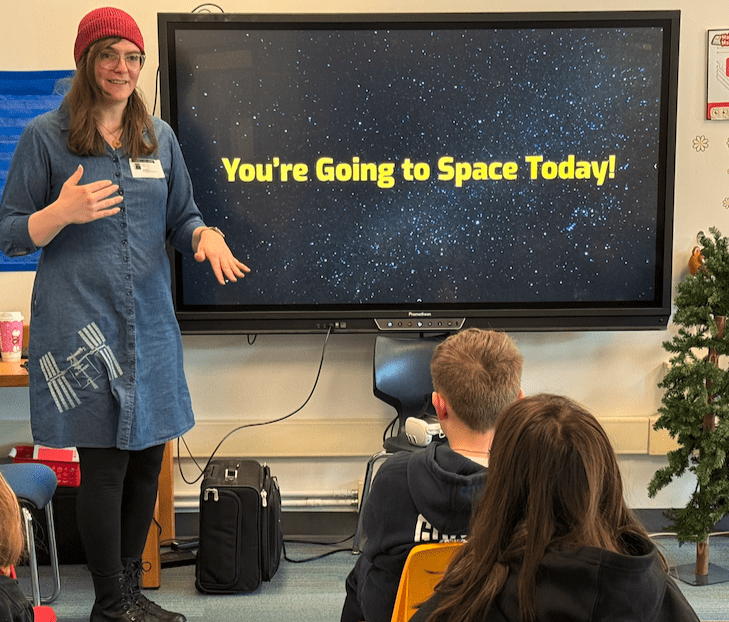
This program is an in-depth experience that extends students’ capacity to identify stars according to their brightness, age, and position in the night sky. Learning about star brightness, students will see this as a relationship between the life cycle of a star and its distance from the Earth. Students learn to identify constellations and distinguish between seasonal and circumpolar constellations. This program also introduces students to the science of spectroscopy to answer the question, How do we know what stars are made of?
In planning Space Systems: Stars and the Solar System for your school or class, you can select from four programs. Space Systems: Stars and the Solar System is best as an on-site experience at the Kopernik campus but can be adapted for presentation at a school location. Kopernik staff can work with your school or district to develop a program tailored to your curriculum, schedule, and budget. Each program is designed for class sections for up to 24 students.
5E. Activity: Constellations and the Movement of the Night Sky
Why do we see different constellations each season? In this program students explore the dynamics of stars in the night sky. They learn about constellations, and how constellations change through the seasons. Students distinguish between the movements of rotation and revolution related to the circumpolar progression of stars and constellations across the sky. Students will learn how to create and use Star Wheels to collect, analyze and interpret data about the seasonal appearance of constellations in the night sky to explain how constellations change with the seasons. Cost: $130 per class section for up to 24 students.
5F. Activity: What Makes a Star a Star?
How do astronomers understand and classify distant stars? In this activity, students learn about the different kinds of stars and how they compare to our own star, the Sun. They will learn how the color and size of a star shows what stage of the star life cycle it is in. With this experience, students experience the process of spectroscopy that was used by early astronomers to learn about what stars are made of and the life cycle of stars. Cost: $130 per class section for up to 24 students.
5G. Activity: Titans of Space – A Virtual Reality Experience of the Solar System
One of the most difficult concepts in astronomy for students to grasp is the scale of distance and size of astronomical objects. Using virtual reality headsets students participate in an immersive tour of the solar system using the program, Titans of Space. Students pilot their own space crafts to travel the solar system, traveling up close to planets, circling around them, and then shearing away to the next. Virtually, students can have an immersive experience of planet sizes in relation to each other and the Sun. They can do “fly-bys” to explore a planet’s surface features and in some cases, its moons or rings. This program can be paired with other activities that emphasize astronomical scale. This experience can accommodate up to 24 students and requires 50 minutes to complete. The cost for one session is $160. Fees for additional activities will be determined based on school requests.
5H. Activity: The Scale of the Solar System (NEW)
How can a model best represent astronomical distance? Students create “pocket solar systems” to represent the distances between the planets of the solar system. Students learn about fundamental differences between the planets, distinguishing between inner terrestrial planets and gas giants. Cost: $130 per class section for up to 24 students.
5I. Activity: Mars Exploration using Augmented Reality
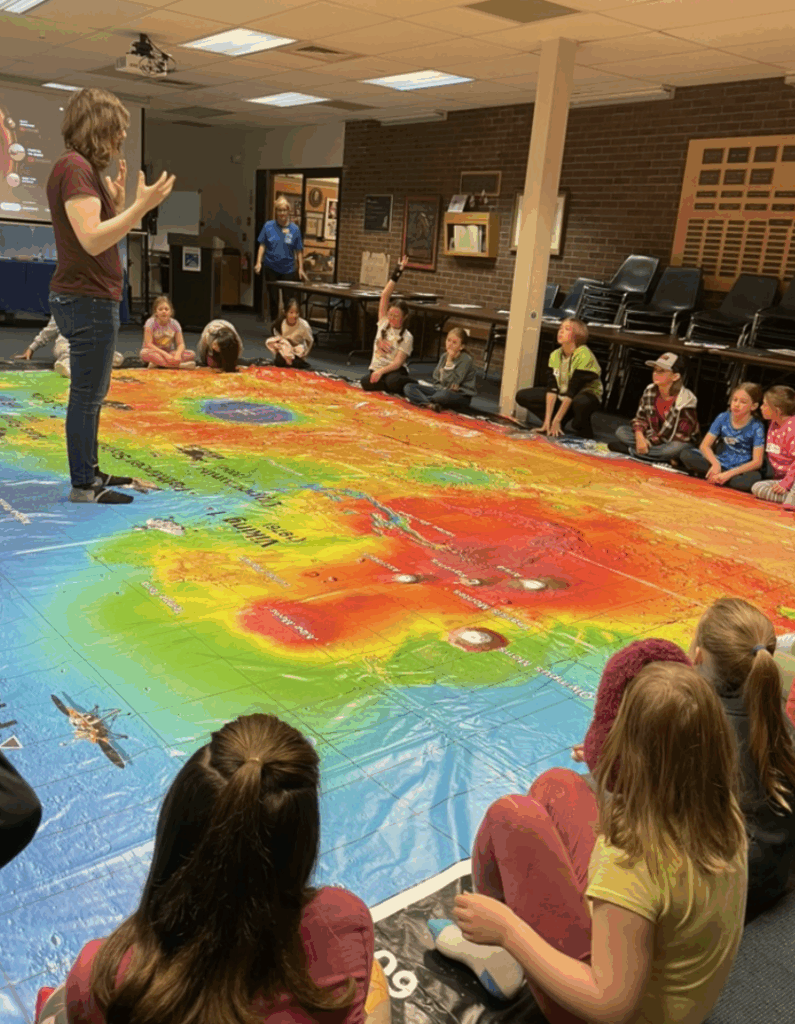
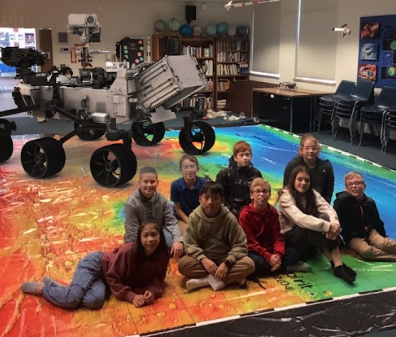
What are the engineering challenges of planet exploration? Beginning in 1976, the surface of Mars has been explored using increasingly more advanced robotics. Using a room-sized elevation map of Mars surface, students walk across the surface of Mars to learn about the evolution of Mars exploration missions. This is followed by students using augmented reality to select and then drive a Mars rover across the surface of Mars controlled by an iPad. Cost: $130 per class section for up to 24 students.
5J. Activity: Mars Exploration using VEX Robotics
What are the engineering challenges of planet exploration? Beginning in 1976, the surface of Mars has been explored using increasingly more advanced robotics. Using a room-sized elevation map of Mars surface, students walk across the surface of Mars to learn about the evolution of Mars exploration missions. This is followed by students working in teams using a remote controlled VEX robot to maneuver objects across Mars surface. Cost: $140 per class section for up to 24 students.
5K. Program (Supplemental): Lego® Spike™ Robotics – Big Bus
This experience introduces students to sensor-based programming. Students build a vehicle that includes a light sensor. Students program the vehicle to perform different movements based on colored objects set in its path. Cost: $130 per class section for up to 24 students.
| GRADE 5 THEMATIC: Space Systems – Stars and the Solar System NYSSLS Alignment | |
| Kopernik Programs Space Systems – Stars and the Solar System | 5E. Constellations and the Movement of the Night Sky 5F. What Stars Are Made Of 5G. Titans of Space: A Virtual Reality Experience of the Solar System 5H. The Scale of the Solar System (NEW) 5I. Mars Exploration using Augmented Reality 5J. Mars Exploration using VEX Robotics 5K. (Supplemental): Lego® Spike™ Robotics – Big Bus |
| Disciplinary Core Ideas | Types of Interactions:
The Universe and its Stars:
Earth and the Solar System:
|
| Crosscutting Concepts | Patterns:
Cause and Effect:
Scale, Proportion, and Quantity:
|
| Science and Engineering Practices | Analyzing and Interpreting Data:
Engaging in Argument from Evidence:
|
MIDDLE SCHOOL PROGRAM: Space Systems
MS-A. Titans of Space: A Virtual Reality Experience of the Solar System
One of the most difficult concepts in astronomy for students to grasp is the scale of distance and size of astronomical objects. Using virtual reality headsets students participate in an immersive tour of the solar system using the program, Titans of Space. Students pilot their own space crafts to travel the solar system, traveling up close to planets, circling around them, and then shearing away to the next. Virtually, students can have an immersive experience of planet sizes in relation to each other and the Sun. They can do “fly-bys” to explore a planet’s surface features and in some cases, its moons or rings. This program can be paired with other activities that emphasize astronomical scale. This experience can accommodate up to 24 students and requires 50 minutes to complete. The cost for one session is $160. Fees for additional activities will be determined based on school requests.
MS-B. Activity: What Makes a Star a Star?
How do astronomers understand and classify distant stars? In this activity, students learn about the different kinds of stars and how they compare to our own star, the Sun. They will learn how the color and size of a star shows what stage of the star life cycle it is in. With this experience, students experience the process of spectroscopy that was used by early astronomers to learn about what stars are made of and the life cycle of stars. Cost: $130 per class section for up to 24 students.
MS-C. Activity: Mars Exploration using VEX Robotics
What are the engineering challenges of planet exploration? Beginning in 1976, the surface of Mars has been explored using increasingly more advanced robotics. Using a room-sized elevation map of Mars surface, students walk across the surface of Mars to learn about the evolution of Mars exploration missions. This is followed by students working in teams using a remote controlled VEX robot to maneuver objects across Mars surface. Cost: $140 per class section for up to 24 students.
MS-D. Activity: Understanding Black Holes
Is a black hole really a hole? Students are intrigued by the concept of a black hole. This program uses modeling to show students the relationship between gravity and matter to understand what a black hole is, and its place in the life cycle of stars. Cost: $130 per class section for up to 24 students.
Program (Supplemental): Lego® Spike™ Robotics – Big Bus
This experience introduces students to sensor-based programming. Students build a vehicle that includes a light sensor. Students program the vehicle to perform different movements based on colored objects set in its path. Cost: $130 per class section for up to 24 students.
| MIDDLE SCHOOL THEMATIC: Space Systems NYSSLS Alignment | |
| Kopernik Programs Space Systems | MS-A. Titans of Space: A Virtual Reality Experience of the Solar System MS-B. What Makes a Star a Star? MS-C. Activity: Mars Exploration using VEX Robotics MS-D. Understanding Black Holes (Supplemental): Lego® Spike™ Robotics – Big Bus |
| Disciplinary Core Ideas | The Universe and Its Stars:
Earth and the Solar System:
|
| Crosscutting Concepts | Patterns:
Scale, Proportion, and Quantity:
Systems and System Models:
|
| Science and Engineering Practices | Developing and Using Models:
Analyzing and Interpreting Data:
|