
Welcome to the Cosmic Compass
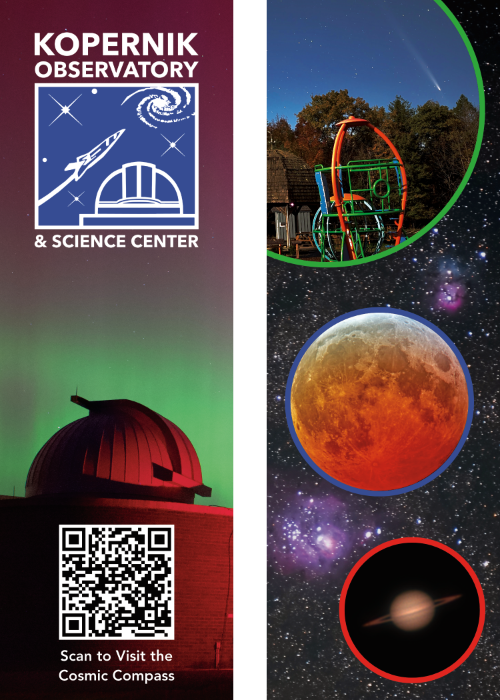
The KOSC Bookmark is your all-access pass to a universe of exploration! Scanning the bookmark brought you here—the Cosmic Compass—our online guide for the cosmos. There’s so much to explore here, but first, let’s learn about the images on your bookmark. At Kopernik, we take pictures of celestial objects and phenomenon in the night sky—this is called astrophotography. Click each object on the virtual bookmark to learn more!
Aurora Borealis at KOSC
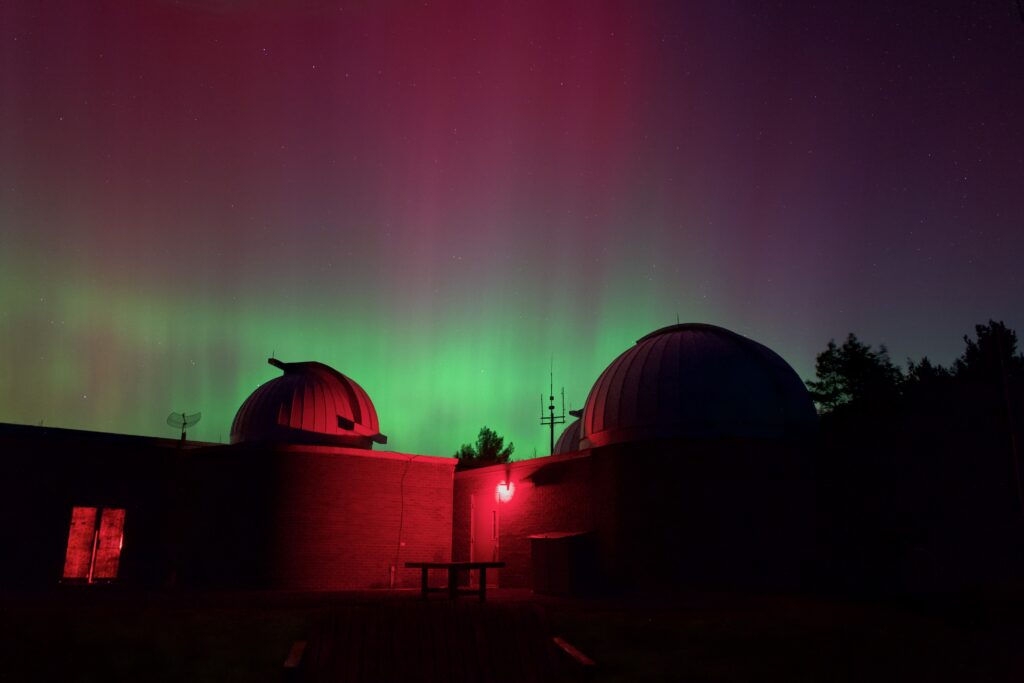
The aurora borealis, also known as the northern lights, are beautiful patterns of light that dance across the sky. They are caused by storms from the sun. While aurora are more common around the North Pole, sometimes we can see them in New York. The aurora pictured here above Kopernik Observatory happened on August 12, 2024.
Celestron Dome
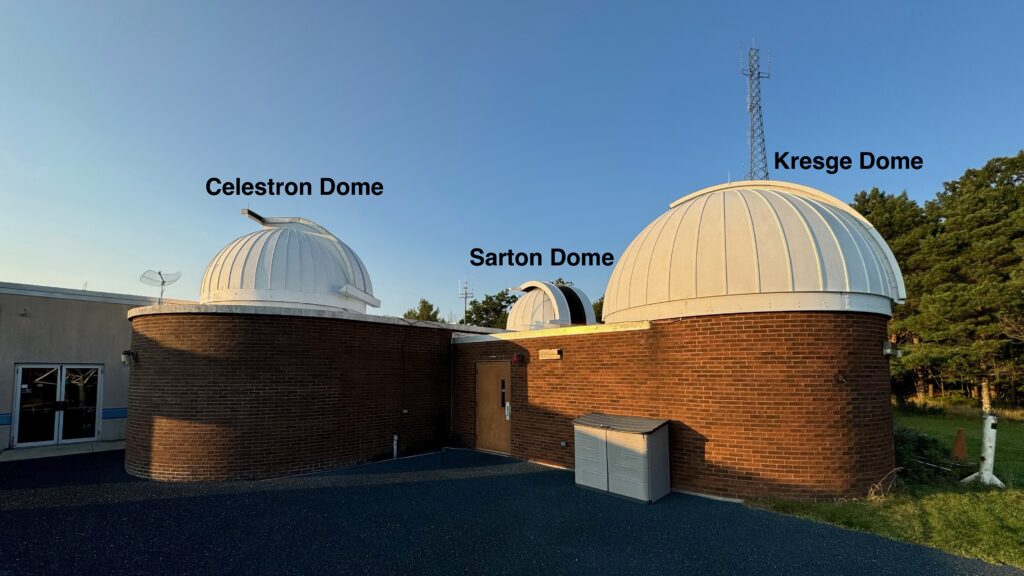
Kopernik Observatory has three domes: the Sarton Dome, the Celestron Dome, & the Kresge Dome. Each dome houses a large telescope. The dome in this northern lights photo is the Celestron Dome. This houses the Celestron 14-Inch EdgeHD reflector telescope which zooms in on objects in the night sky using a mirror.
Comet at the Science Park
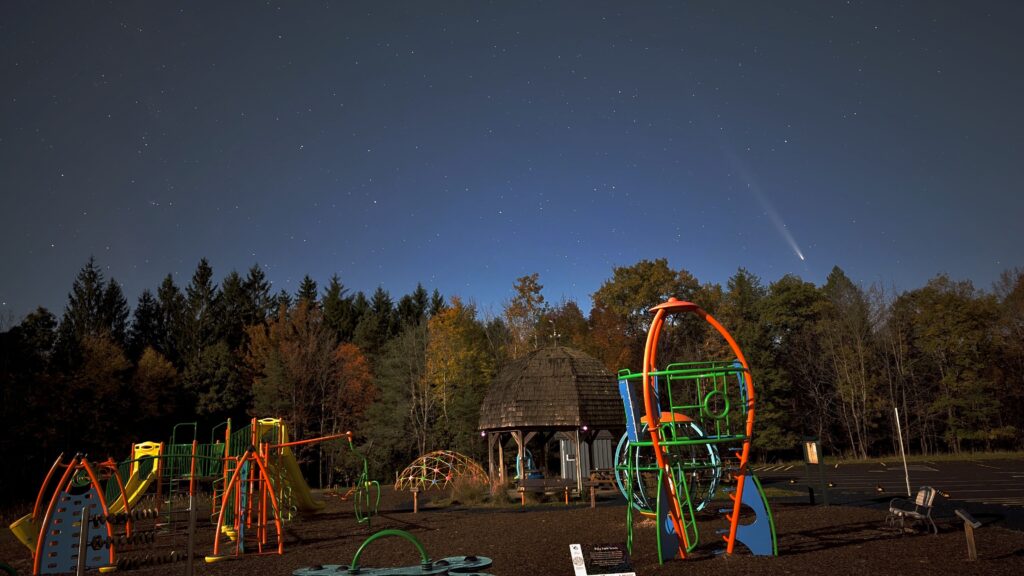
Comets come from the outer reaches of the Solar System—from either the Kuiper Belt or the Oort cloud. They are made of ice and dust. As comets get closer to the Sun, they brighten and develop tails. This photo was taken at the Kopernik Science Park with a smartphone. It shows Comet Tsuchinshan–ATLAS and its long tail stretching across our evening sky on October 15, 2024.
Total Lunar Eclipse
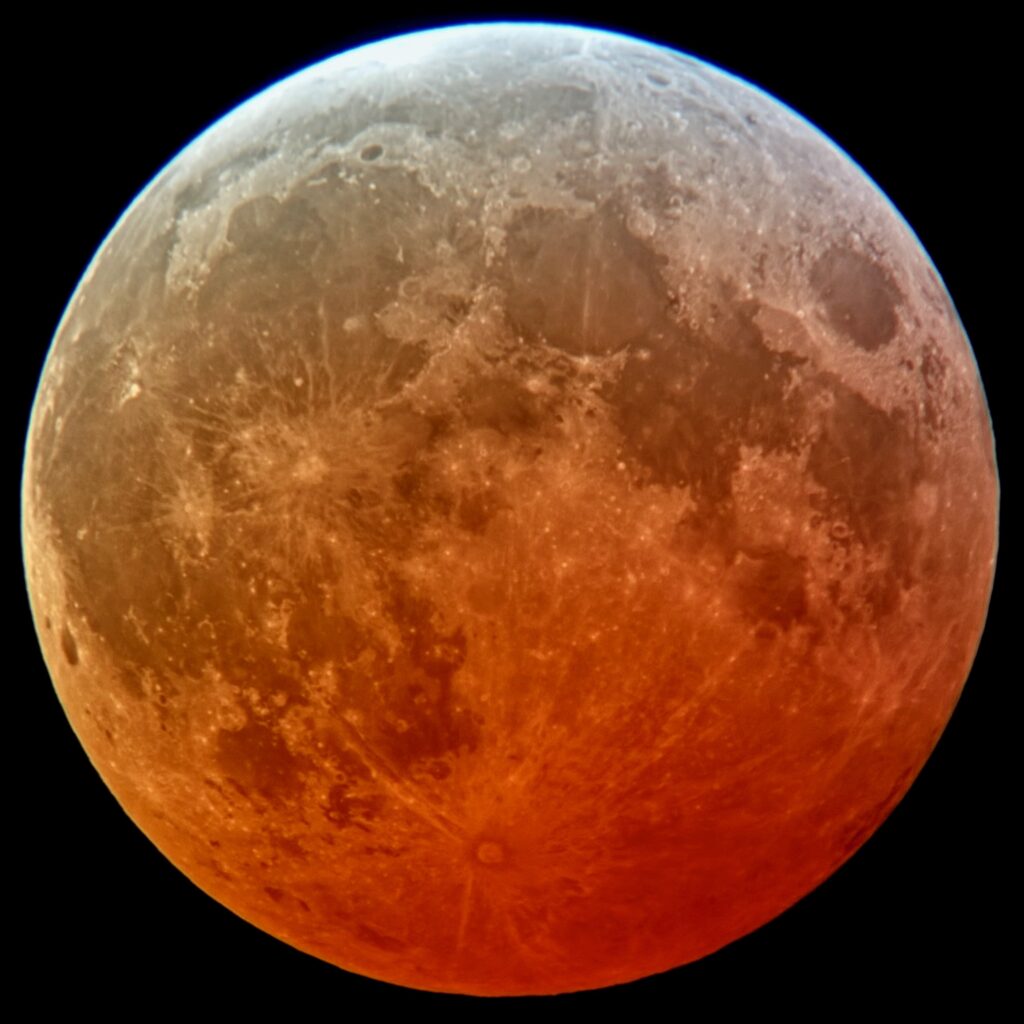
A total lunar eclipse happens when the Moon completely enters the Earth’s shadow. During a total lunar eclipse, the Moon turns red. This photo of a total lunar eclipse was taken on March 14, 2025 with Kopernik’s 6-Inch Super Planetary Refractor telescope found in the Sarton Dome. This telescope uses a lens to zoom in on objects.
Saturn
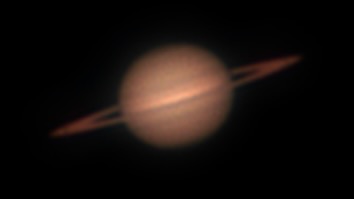
Saturn is the sixth planet from the Sun and the second largest planet in the Solar System. It is a gas giant made of hydrogen and helium with a complex ring system. This image of Saturn shows the true power of Kopernik’s Super Planetary Refractor telescope. Imaged on September 19, 2024, it captures the main planet and its ring system.
Trifid Nebula (M20)
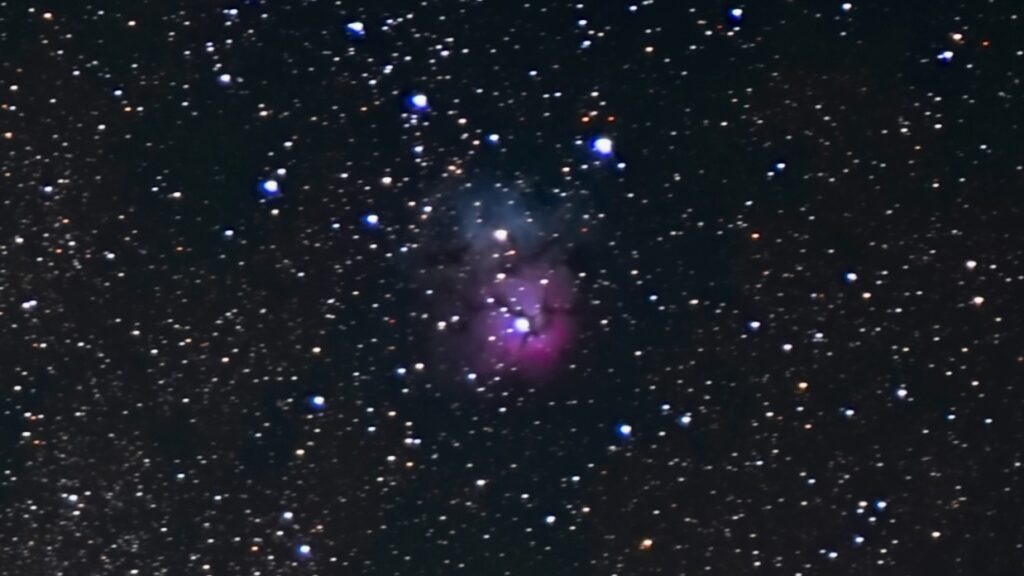
This is an object beyond the Solar System, but it still resides in the Milky Way galaxy. Located 9,000 light-years away from Earth, the Trifid Nebula is a star-forming region in the constellation Sagittarius. It’s well-known for its contrasting blue and pink color. The blue is starlight reflecting off of cosmic clouds of dust and gas. The pink is gas being energized by surrounding stars, causing it to glow.
Lagoon Nebula (M8)
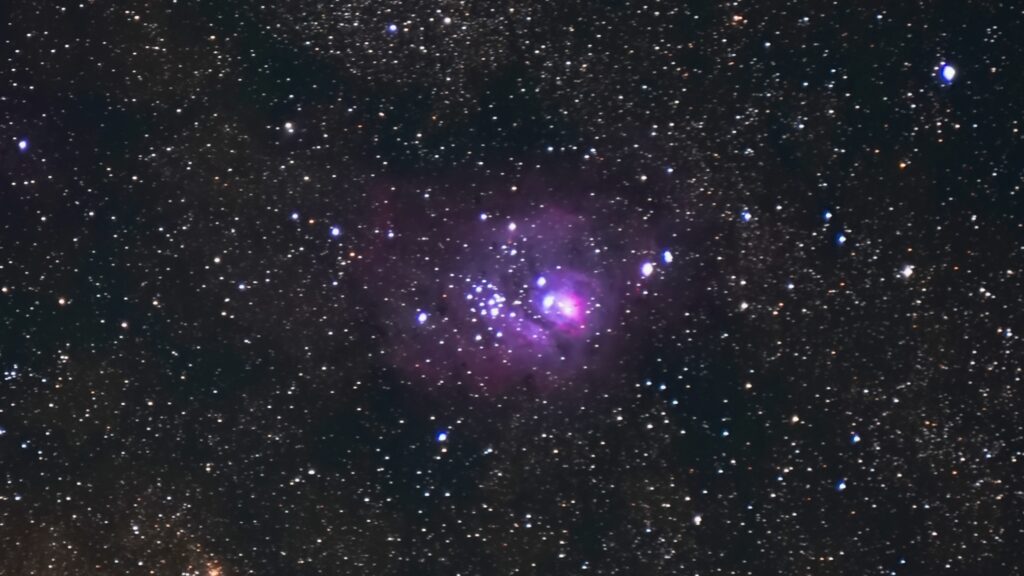
This is an object beyond the Solar System, but it still resides in the Milky Way galaxy. Located 5,200 light-years away from Earth, the Lagoon Nebula is a star-forming cloud in the constellation Sagittarius. This nebula can be faintly seen in dark skies without a telescope. This photo of Lagoon (and Trifid) was taken on July 4, 2022 at Kopernik using a wide-field camera.
Cosmic Compass Resources
The goal of the Cosmic Compass is to guide you to the best astronomical tools and resources. We also want to focus on tools that are highly accessible and ideally, free to access. The Cosmic Compass also highlights Kopernik’s outreach programs and resources like our Friday night programs, where you can return to KOSC to look through telescopes and see the Moon, planets, stars, and so much more!
Stellarium
Bring the Planetarium Experience Home
Stellarium is a powerful planetarium app that works on just about any device. You can run Stellarium on a PC, a smartphone—even a VR headset! Travel through time to explore future astronomical events or teleport to the red planet to observe a martian night sky. The possibilities are endless!
Download a Printable Evening Sky Map
The Evening Sky Map (PDF) is a 2-page monthly guide to the night sky suitable for all sky watchers including newcomers to Astronomy. Designed to print clearly on all printers, The Evening Sky Map is ready-to-use and will help you to:
- Identify planets, stars and major constellations
- Find sparkling star clusters, wispy nebulae & distant galaxies
- Locate and follow bright comets across the sky
- Learn about the night sky and Astronomy
Total Lunar Eclipse in a Minute
Watch a time-lapse of the total lunar eclipse that happened on March 14, 2025. We observed this event live on our YouTube channel at KOSC and this time-lapse was created using photos collected from Kopernik’s Seestar S50 Smart Telescope. The time-lapse condenses the 6-hour eclipse event down to just one-minute!
More Education Resources
